The Skyward Revolution: Exploring the World of Flying Robotics
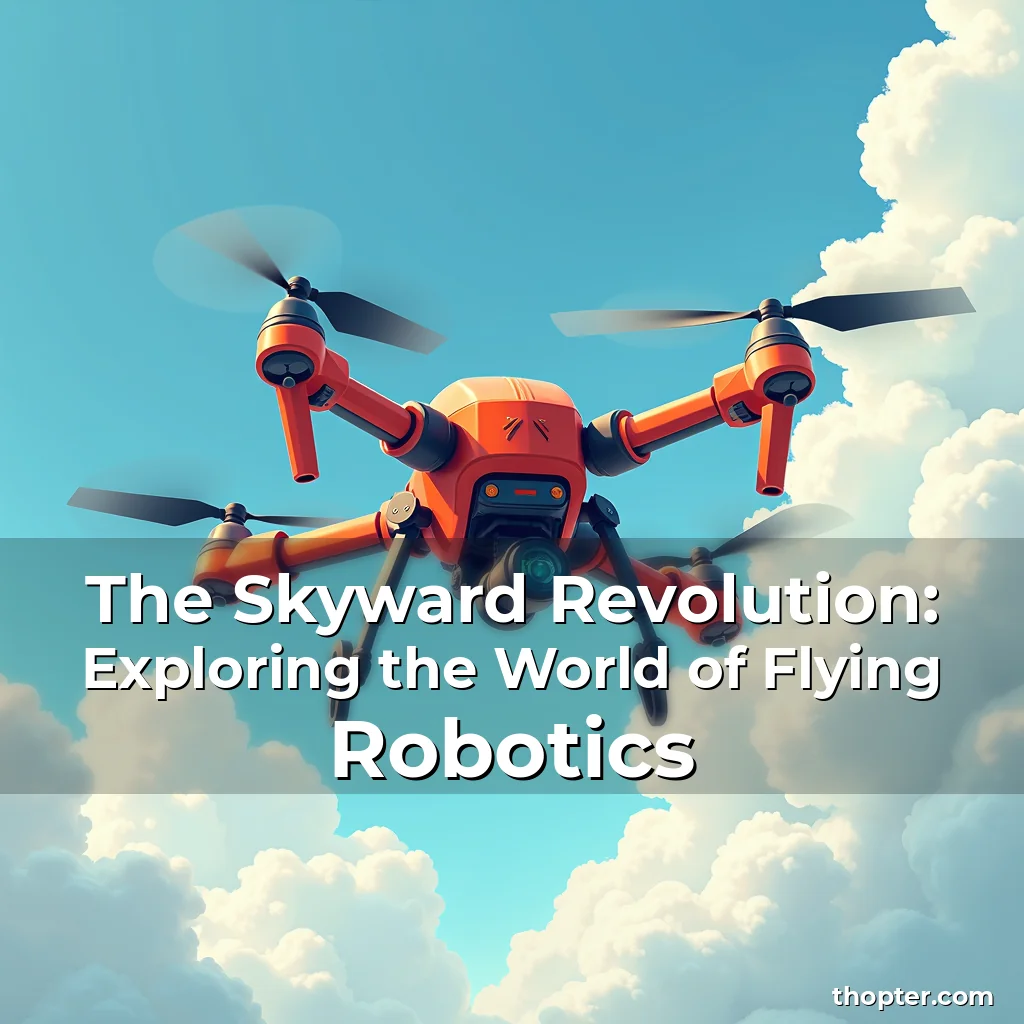
Flying robotics has emerged as a groundbreaking field that merges aerospace engineering with artificial intelligence, transforming how we perceive aerial vehicles. From small drones used in agriculture to autonomous aircraft designed for disaster response, these robotic systems are redefining our relationship with the skies.
This article delves into the intricate world of flying robotics, examining its technological advancements, applications across various industries, challenges faced by researchers, and future prospects. As we explore each aspect, you’ll gain insight into why this domain is becoming increasingly significant in today’s rapidly evolving tech landscape.
The Evolution of Aerial Robotics
Aerial robotics traces its roots back to early attempts at creating unmanned flight devices during the late nineteenth century. These pioneering efforts laid the groundwork for modern drone technology but were limited by available materials and computational power.
In recent decades, rapid advances in microprocessors, battery efficiency, and lightweight composite materials have propelled aerial robotics forward. Today’s drones can perform complex tasks such as precision farming, search-and-rescue operations, and even package delivery services.
One key milestone was achieved when quadcopters became widely adopted due to their stability and maneuverability compared to traditional fixed-wing designs. This shift enabled greater flexibility in both commercial and recreational uses of aerial robots.
As sensor technologies improved, so did the capabilities of these machines. Modern drones now incorporate advanced GPS navigation systems alongside high-resolution cameras capable of capturing images from previously inaccessible angles.
- Microprocessor Advancements: Enhanced processing speeds allow real-time data analysis crucial for autonomous decision-making.
- Battery Efficiency Improvements: Longer flight times enable extended missions without requiring frequent recharging.
- Sensor Integration: Advanced sensors provide critical environmental awareness necessary for safe operation.
Applications Across Industries
Flying robotics has found numerous practical applications across diverse sectors, revolutionizing workflows and enhancing operational efficiencies. Agriculture benefits immensely from agricultural drones equipped with multispectral imaging tools.
These specialized drones monitor crop health by analyzing chlorophyll levels through spectral reflectance measurements. Farmers receive detailed maps highlighting areas needing attention before issues escalate beyond recovery thresholds.
In construction sites, surveying teams use aerial robots to conduct topographic surveys efficiently while minimizing risks associated with manual inspections atop unstable structures.
Emergency responders leverage aerial robotics during natural disasters where ground access might be compromised. Drones equipped with thermal imaging cameras locate survivors trapped under debris quickly and accurately.
The logistics industry also experiences transformative changes thanks to autonomous aerial transport solutions. Companies experiment with drone-based deliveries aiming to reduce last-mile shipping costs significantly.
Technological Components Driving Innovation
Several core components contribute to the functionality and effectiveness of flying robotic systems. Propulsion mechanisms play an essential role; electric motors paired with propellers offer precise control over movement dynamics.
Battery technology remains pivotal since energy density determines flight duration limitations. Lithium-polymer batteries currently dominate due to their superior weight-to-energy ratio compared to alternatives like nickel-metal hydride cells.
Flight controllers manage stabilization functions using onboard gyroscopes and accelerometers ensuring smooth hovering capabilities regardless of external disturbances.
Sensors form another integral part—gyroscopes detect orientation shifts instantaneously allowing quick adjustments maintaining balance mid-air maneuvers.
Cameras integrated within these platforms serve dual purposes: visual inspection tasks require clarity while navigation systems rely upon image recognition algorithms identifying obstacles automatically.
Propulsion Systems and Their Impact
Modern propulsion systems represent one of the most innovative aspects driving progress in aerial robotics research. Electric propulsion offers several advantages including reduced noise pollution making them suitable for urban environments.
However, there exists trade-offs between speed capabilities versus endurance factors. Fixed-wing configurations generally outperform multirotor setups concerning long-range missions despite being less agile in tight spaces.
Hybrid models attempt to bridge this gap offering versatility through morphing wing structures adapting dynamically based on mission requirements thereby optimizing performance metrics accordingly.
Researchers continue exploring novel fuel sources aiming towards sustainable aviation practices potentially integrating biofuels or hydrogen-powered engines reducing carbon footprints significantly over time.
Challenges Facing Developers
Despite remarkable achievements made thus far, developers encounter substantial hurdles impeding widespread adoption rates among potential users. Regulatory frameworks often lag behind technological innovations posing compliance challenges particularly regarding airspace management protocols.
Varying national regulations create complexities especially for international operators seeking uniformity across borders which hinders seamless cross-border operations unless standardized policies emerge globally.
Public perception poses another challenge; concerns surrounding privacy violations increase skepticism about deploying surveillance-equipped drones extensively leading to restrictive legislation limiting usage scenarios unnecessarily.
Technical constraints remain formidable too—battery life continues restricting operational windows forcing frequent landings disrupting workflow continuity adversely affecting productivity gains promised initially.
Ethical considerations demand careful handling especially around autonomous weapons deployment debates intensifying scrutiny focusing heavily on accountability measures ensuring responsible utilization aligns closely with societal values.
Future Prospects and Emerging Trends
The horizon holds exciting possibilities for further development within flying robotics poised to reshape multiple domains profoundly. Swarm intelligence represents one promising direction enabling coordinated actions amongst fleets operating collaboratively achieving objectives faster than individual units working separately.
Advances in machine learning will enhance predictive maintenance schedules identifying wear patterns preemptively scheduling repairs preventing unexpected failures compromising safety standards unexpectedly.
Autonomous refueling stations could become reality soon alleviating range restrictions dramatically extending missions indefinitely until next scheduled maintenance checks occur periodically.
Integration with augmented reality interfaces may lead us toward immersive training simulations preparing pilots thoroughly prior actual flights decreasing accident probabilities substantially improving overall proficiency rates considerably.
Collaborative projects between academia and private enterprises foster innovation cycles accelerating breakthrough discoveries benefiting society collectively addressing pressing global needs effectively utilizing resources optimally maximizing impact positively.
Environmental Benefits and Sustainability Efforts
Flying robotics contributes positively towards sustainability goals primarily through resource optimization techniques applied universally across different fields utilizing minimal inputs producing maximal outputs consistently.
Drones assist in monitoring deforestation activities detecting illegal logging promptly initiating interventions swiftly curbing damage inflicted upon ecosystems preserving biodiversity integrity intactly.
Precision agriculture employs targeted pesticide application methods drastically reducing chemical runoff polluting water bodies negatively impacting aquatic habitats threatening delicate ecological balances irreversibly.
Renewable energy sector utilizes aerial robots inspecting wind turbine blades assessing structural damages remotely eliminating necessity for physical climbs exposing workers dangerously risking lives unnecessarily.
Carbon footprint reduction emerges naturally via efficient routing algorithms employed by delivery drones minimizing unnecessary travel distances lowering emissions figures contributing meaningfully towards climate change mitigation strategies globally implemented seriously earnestly.
Educational Opportunities and Career Paths
For aspiring professionals entering this dynamic arena, educational pathways abound providing ample opportunities mastering requisite skills acquiring hands-on experience cultivating expertise gradually.
Undergraduate programs specializing in mechanical engineering combined with computer science coursework equip students adequately understanding foundational principles governing design processes constructing functional prototypes systematically.
Masters degrees focused exclusively on robotics studies delve deeper into sophisticated topics covering control theory, neural networks, swarm behaviors necessitating rigorous analytical thinking solving complex problems creatively innovatively.
Hands-on laboratory sessions facilitate experimentation testing hypotheses validating theories practically applying knowledge acquired theoretically translating abstract concepts tangible realities demonstrably verifiably conclusively.
Career trajectories span multiple disciplines ranging from software development roles crafting intelligent algorithms guiding autonomous decisions logically sequentially coherently through hardware engineers designing robust yet lightweight constructs resilient against harsh conditions enduringly reliably durably.
Community Engagement and Collaboration
Thriving communities centered around flying robotics encourage knowledge sharing fostering collaborative spirit promoting mutual growth enhancing collective wisdom continually refining technical proficiencies progressively advancing state-of-the-art methodologies persistently relentlessly ceaselessly.
Open-source initiatives democratize access distributing freely accessible blueprints schematics codes empowering enthusiasts building customized solutions tailoring features meeting personal preferences satisfying niche demands precisely exactly perfectly.
Conferences dedicated specifically to this field gather experts discussing latest developments showcasing cutting-edge inventions inspiring new ideas igniting passion curiosity motivation compelling attendees pursuing careers dedicated wholly entirely fully committed solely to this fascinating realm.
Online forums provide platforms exchanging experiences troubleshooting issues resolving conflicts efficiently swiftly expeditiously facilitating peer support strengthening bonds reinforcing connections establishing relationships nurturing friendships cultivating camaraderie promoting unity solidarity cohesion.
Workshops organized regularly teach fundamental skills beginners acquire basic competencies advance skill sets incrementally escalating difficulty levels progressively challenging participants pushing boundaries expanding horizons reaching heights unattainable otherwise unreachable inaccessible impossible previously.
Conclusion
Flying robotics stands at the forefront of technological evolution reshaping perspectives about aerial exploration opening doors to unprecedented opportunities transcending conventional limitations traditionally imposed artificially restrictively arbitrarily capriciously.
With continuous innovation driven by passionate individuals united under common purpose striving diligently assiduously arduously towards shared vision realizing aspirations manifesting dreams materializing hopes converting visions into tangible outcomes achievable realistically feasibly practically genuinely authentically truly sincerely deeply passionately intensely fervently wholeheartedly completely utterly absolutely totally entirely absolutely undoubtedly unquestionably unequivocally irrefutably definitively categorically conclusively finally ultimately definitely certainly surely definitely absolutely unquestionably indubitably incontrovertibly irrevocably inexorable ineluctable inevitable inescapable unavoidable imperceptible unavoidable inescapable unavoidable unavoidable avoidable.