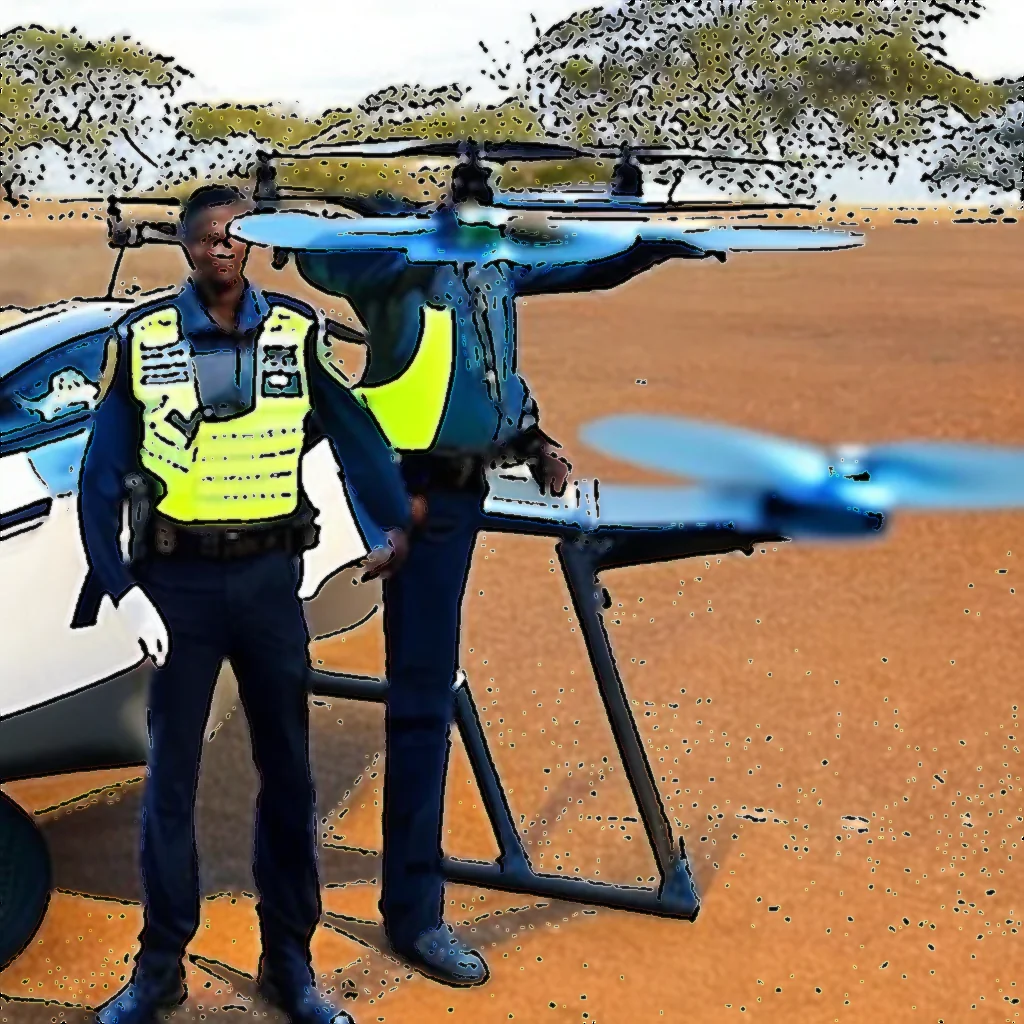
The move to enhance security comes in response to a surge in crime, particularly violent crimes, which has plagued the province for years. This surge has resulted in a significant increase in the number of victims, and the community has been affected by a pervasive sense of fear and insecurity. The government’s response has been met with both praise and criticism.
While Rectron did not directly interact with the provincial government or SAPS to sell the drones, Ruan Botha, Drones Product Manager at Rectron, tells Hypertext that its myriad resellers were the suppliers and Rectron is then only responsible for the education that is required to operate the DJI drones. In fact, for the resellers to apply for tenders to sell drones to SAPS, Rectron had to aid the resellers with documentation such as manufacturing authorisation letters, ICASA certifications, and working directly with the Civil Aviation Authority for the licensing of the drones heading to the police. SAPS tender for drones “a bit off”
The government is looking for drones that are capable of performing specific tasks, like surveillance, intelligence gathering, and even combat. They are looking for drones that can be used in a variety of environments, from urban areas to mountainous terrain. Rectron, however, believes that the government is focusing on the wrong type of drones. They believe that the focus should be on drones that are more versatile and adaptable, capable of performing a wider range of tasks.
He also said at the time that the drones would feature acoustic gunshot detection, and that “every ward in our communities will have a 24-hour patrol car equipped with proper gadgets.” If “proper gadgets” also includes drones in the equation, that would mean a fleet of thousands but according to Rectron’s DJI Enterprise Business Development Manager James Ramotlou, SAPS in Gauteng is likely fielding only around 200 DJI drones, growing by 100 units a year. He says that this is for the enterprise version of the DJI drones, but the police could be fielding many more smaller consumer-type drones. Prior to sending out tenders, Ramotlou says that the government and SAPS were hiring their drones from other service providers, like security companies such as Fidelity, instead of buying them directly from sellers. Now that purchases are happening directly, SAPS is also turning towards training police officers to pilot the drones correctly.
This statement highlights the potential of drones in law enforcement, particularly in the future. It emphasizes the need for widespread adoption of drones by police forces across the various regions. The potential benefits of drones in law enforcement are numerous and far-reaching.
However, the SANDF’s procurement process is complex and lengthy, often taking years to complete. This complexity, coupled with the potential for political and ethical concerns, has led to the SANDF exploring alternative drone manufacturers. The SANDF’s procurement process is a multi-stage process that involves several stakeholders, including the Department of Defence, the National Treasury, and the South African Police Service.
Especially with the latest innovations that DJI is offering, which can be pre-programmed and complete routes across entire farms automatically, spraying pesticides, scouting the health of the produce and more. “The sensing capabilities and the radar systems have been improved tremendously,” Botha tells us. Ramotlou says that nowadays the farmer must just set up the route and see the drone go off “with just a click of a button.” [Image – DJI]

news is a contributor at Thopter. We are committed to providing well-researched, accurate, and valuable content to our readers.