The Sky’s New Business Frontier: How Commercial Drones Are Revolutionizing Industries
In an era where technology continuously reshapes traditional practices, commercial drones have emerged as transformative tools across various sectors. From agriculture to construction, these aerial platforms are redefining efficiency and precision.
With advancements in battery life, imaging technology, and autonomous navigation systems, businesses are discovering new ways to optimize operations while reducing costs significantly. This shift is not merely technological but represents a fundamental change in how industries operate today.
Understanding Commercial Drones and Their Unique Capabilities
Commercial drones differ from consumer models through enhanced durability, longer flight times, and specialized equipment tailored for professional applications. These features make them ideal for tasks requiring high accuracy over extended periods.
Advanced sensors enable real-time data collection that was previously unattainable without expensive ground-based solutions. For instance, thermal imaging cameras can detect issues within infrastructure before they become critical problems.
The integration of GPS and AI-driven analytics allows for precise mapping and monitoring capabilities that revolutionize surveying methods traditionally reliant on manual labor or costly satellite imagery.
- Battery Technology: Modern lithium-polymer batteries offer up to double the runtime compared to older nickel-cadmium models used in early drone versions.
- Payload Capacity: High-end commercial drones can carry payloads exceeding 10 kilograms, enabling complex missions such as delivering medical supplies in remote areas.
Durability improvements mean these machines can withstand harsh weather conditions typical in industrial environments. Manufacturers now incorporate waterproof materials and reinforced frames specifically designed for outdoor use cases.
Regulatory compliance has also evolved alongside hardware advancements; many countries now require operators to complete certification programs ensuring safe operation under varying environmental conditions.
Transformative Applications Across Key Sectors
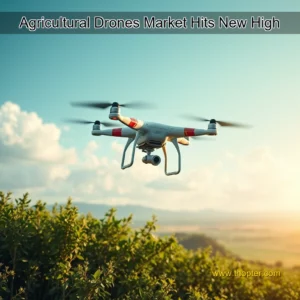
Agriculture stands at the forefront of drone adoption due to its ability to monitor crop health using multispectral imaging techniques. Farmers can assess soil moisture levels and identify pest infestations far quicker than conventional inspection methods allow.
This rapid assessment enables timely interventions that prevent yield loss and reduce chemical usage by precisely targeting affected zones rather than treating entire fields indiscriminately.
Logistics companies are leveraging drones for last-mile delivery services, particularly beneficial in rural regions where road networks are sparse or unreliable. Companies like Amazon Prime Air have been testing such models since 2016.
Construction sites benefit immensely from drone surveys which provide accurate topographical maps essential for project planning stages. Real-time progress tracking ensures adherence to timelines while minimizing resource wastage during execution phases.
E-commerce giants utilize drones not only for deliveries but also for inventory management within warehouses. Automated scanning routines help maintain optimal stock levels and alert staff when restocking becomes necessary.
Emergency response teams employ drones equipped with night vision and thermal imaging to locate missing persons quickly during search-and-rescue missions. This capability dramatically reduces time spent searching vast terrains manually.
Cost Efficiency Gained Through Drone Integration
Businesses integrating commercial drones report significant reductions in operational expenses ranging between 20% to 40%. Traditional surveying methods often involve hiring crews with specialized equipment costing thousands per day.
Drones eliminate the need for extensive manpower required in manual inspections while providing higher-resolution images suitable for detailed analysis purposes. This dual advantage translates directly into lower overheads without compromising quality standards.
For example, utility providers save millions annually by inspecting power lines remotely instead of sending workers aloft via helicopters or scaffolding setups which pose safety risks along with increased expenditures.
Data acquisition processes that once took weeks can now be completed in hours thanks to automated flight paths pre-programmed with mission-specific parameters ensuring consistent coverage patterns each session.
Insurance firms leverage drone footage post-disaster scenarios to expedite claims processing by obtaining verifiable damage assessments rapidly without having adjusters physically visit damaged properties first.
Healthcare organizations use drones to transport blood samples and medications swiftly between facilities located miles apart, drastically improving patient care turnaround times crucial for emergency treatments.
Rapid Growth Driven By Technological Advancements
Advancements in artificial intelligence have led to smarter drones capable of identifying objects autonomously during flights without human intervention. Machine learning algorithms train these devices to recognize anomalies indicative of potential hazards ahead.
Improved connectivity options including 5G networks ensure seamless transmission of high-definition video streams back to control centers allowing instant decision-making based upon live feeds captured mid-flight operations.
Batteries continue evolving with solid-state variants promising even greater energy densities potentially extending single-charged flight durations beyond current limitations set by existing lithium-ion technologies.
Lightweight carbon fiber composites replace heavier metal components commonly found in earlier generations leading to overall weight reduction facilitating faster acceleration rates combined with improved maneuverability characteristics vital during dynamic missions.
Cybersecurity measures integrated into newer models protect against unauthorized access attempts aiming to hijack drone controls remotely thereby safeguarding sensitive corporate data transmitted wirelessly during active missions.
Autonomous charging stations strategically placed around worksites minimize downtime associated with frequent recharging cycles making continuous round-the-clock surveillance feasible especially relevant for security patrols or agricultural monitoring needs spanning overnight periods.
Challenges Faced In Widespread Adoption Of Commercial Drones
Despite numerous benefits offered by commercial drones, several challenges hinder their full-scale implementation across different industries globally. Chief among these concerns relate primarily to airspace regulations governing legal flying altitudes and permissible distances from populated areas.
Operators must navigate complicated licensing procedures involving both national aviation authorities plus local municipal laws sometimes conflicting with federal guidelines creating confusion regarding acceptable operating boundaries.
Privacy issues arise concerning public spaces monitored extensively through high-resolution cameras mounted onto unmanned aerial vehicles raising ethical questions about personal freedoms versus business interests seeking maximum operational flexibility under regulatory constraints.
Safety remains another paramount concern particularly regarding potential collisions with manned aircraft or unexpected malfunctions causing crashes near residential neighborhoods posing serious threats to civilian populations below.
Environmental impact debates persist around noise pollution generated by propellers disrupting wildlife habitats adjacent to frequently flown routes besides contributing additional carbon emissions albeit minimal compared to larger transportation modes.
Technological reliability poses yet another hurdle; despite ongoing enhancements, mechanical failures still occur occasionally necessitating robust maintenance schedules ensuring uninterrupted service continuity amid high-stakes operational demands.
Futuristic Trends Shaping Tomorrow’s Commercial Drone Landscape
Future developments indicate a move towards swarm robotics where multiple coordinated drones work together simultaneously executing complex tasks more efficiently than individual units working separately would achieve alone.
Integration with Internet of Things (IoT) ecosystems promises intelligent automation linking physical assets with digital twins enabling predictive maintenance strategies anticipating component wear before actual breakdown occurs preventing costly disruptions unexpectedly halting production flows.
Quantum computing breakthroughs may soon enhance pathfinding algorithms allowing instantaneous recalculations adapting dynamically changing environments encountered en route ensuring safer navigational outcomes amidst unpredictable atmospheric disturbances affecting flight stability adversely otherwise.
Holographic displays projected onto transparent screens inside cockpits could soon provide pilots immersive visualizations overlaying real-world landscapes with virtual markers highlighting points of interest enhancing situational awareness exponentially surpassing conventional two-dimensional telemetry readings currently relied upon heavily.
Biodegradable materials research aims eventually replacing plastic components entirely thus mitigating long-term ecological footprints left behind after decommissioned units reach end-of-life phases eliminating toxic waste disposal dilemmas altogether permanently resolving sustainability controversies surrounding drone manufacturing practices historically criticized environmentally unfriendly approaches utilized predominantly until recently.
Neural interface technologies being tested experimentally might someday permit direct brain-computer interactions controlling drones mentally opening unprecedented possibilities transforming pilot training requirements fundamentally altering how future professionals interact with airborne apparatuses intuitively without needing traditional joystick interfaces anymore.
Conclusion
As we’ve explored throughout this discussion, commercial drones represent much more than mere gadgets—they signify paradigm shifts occurring right now across diverse domains impacting everyday lives profoundly whether knowingly or unknowingly.
From streamlining supply chains through optimized logistics solutions down to preserving natural resources via precision farming methodologies employed successfully worldwide today, there exists immense potential waiting to be fully realized provided stakeholders remain committed addressing remaining obstacles head-on proactively.

news is a contributor at Thopter. We are committed to providing well-researched, accurate, and valuable content to our readers.