Increasingly Deadly Attacks
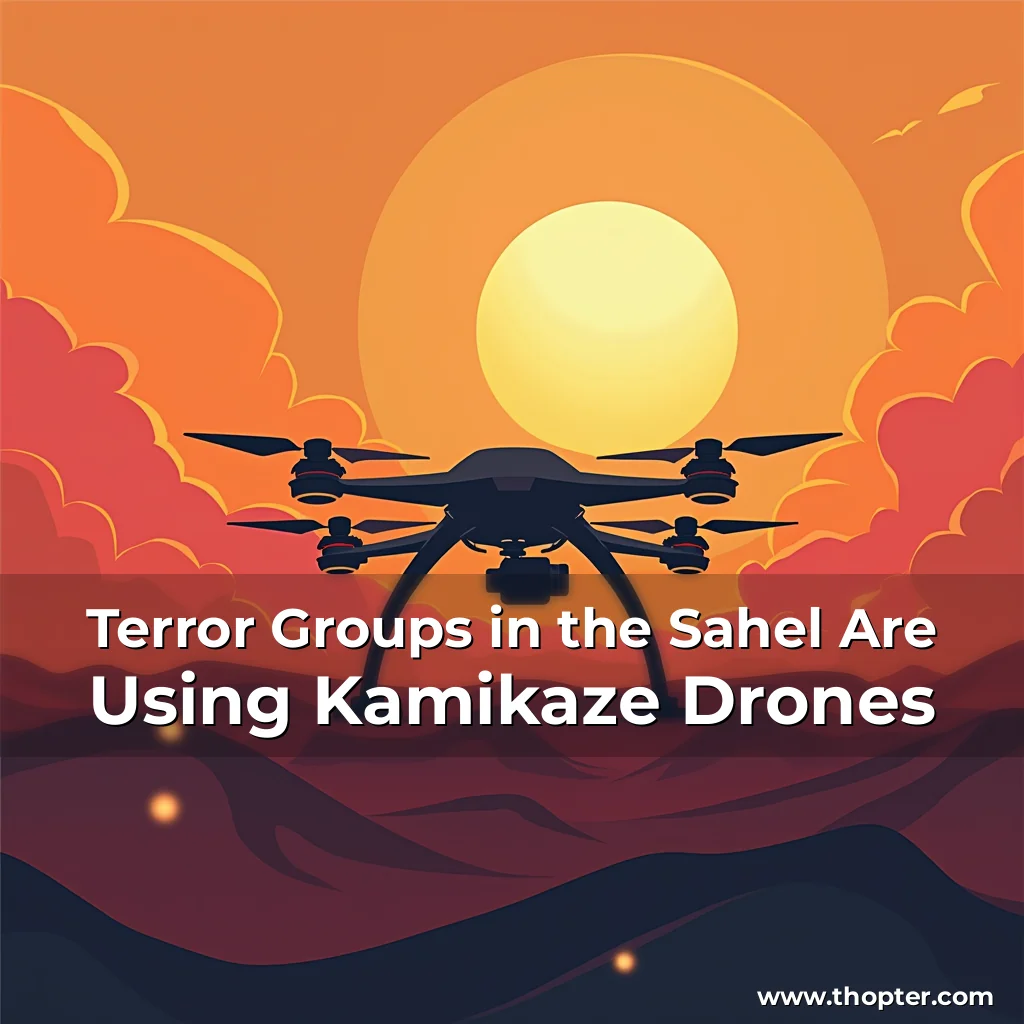
Terror groups in the Sahel region have been using new tactics, including armed suicide or kamikaze drones, to carry out attacks on cities in western Mali on 1 July, according to a government statement. These attacks have resulted in severe human and structural damage, and have increased fear among soldiers.
Shift in Asymmetric Tactics
The use of commercially available small civilian drones for strikes by terrorist and armed rebel groups is not limited to Mali, and has become prevalent throughout the Central Sahel. This represents a shift in asymmetric tactics, as armed groups circumvent the conventional military superiority of the region’s armed forces.
- The use of drones by terrorist groups is a response to the conventional military superiority of the region’s armed forces.
- The use of drones by terrorist groups is a result of the successful use of drones by regular armies in other conflict zones.
Examples of Kamikaze Drone Attacks
• In Burkina Faso, over a dozen kamikaze drone strikes have been reported since February. • In May, the extremist group Jama’at Nusrat ul-Islam wa al-Muslimin (JNIM) deployed drones during violent assaults on the towns of Djibo and Diapaga in the north and east of the country. • On 25 May, Islamic State in the Greater Sahara used kamikaze drones for the first time against an army position in Eknewan near the border with Mali, killing 64 soldiers. • The Azawad Liberation Front, fighting for independence from the central government in Bamako, used suicide drones to attack a Malian Armed Forces command centre and Wagner headquarters in Léré, southwest of Timbuktu.
Adaptation and Evolution of Tactics
Since 2022, drones have been used primarily to spy on military and security forces or create propaganda videos. However, over the past two years, their adaptation to enable the dropping of improvised explosive devices on military positions has soared.
| Country | Year | Use of Drones |
|---|---|---|
| Mali | 2022 | Spying on military and security forces or creating propaganda videos |
| Mali | 2023 | Deploying drones against positions held by the Dogon self-defence militia Dan Na Ambassagou, in Bandiagara in Mali’s Mopti region |
| Burkina Faso | 2023 | Using drones against the trenches dug around towns to impede their access via motorcycles |
Regulation and Control of Drones
The Sahel states lack the capacity to control and monitor their borders effectively, making it easy for militant groups to acquire and modify civilian drones. Given this, Sahel governments should consider measures to regulate the widespread sale and use of civilian commercial drones in the region.
The Wassenaar Arrangement, which governs the export of dual-use goods and technologies, could be used to establish appropriate regulatory frameworks for commercial drones.
You Might Also Enjoy: Protecting National Defense Sites from Drone Surveillance
Beyond military responses, sustainable non-kinetic solutions are needed to address the root causes of the conflict. These include:
- Weakening the armed groups by encouraging defections among their fighters, and
- Tackling the many socio-economic challenges that increase the vulnerability of local populations.
The use of kamikaze drones by terrorist groups in the Sahel region is a serious threat to defence and security forces, and could exacerbate a conflict that has persisted for over a decade. Sahel governments must overhaul their strategies to address this emerging threat, and consider measures to regulate the use of civilian commercial drones in the region. Sustainable non-kinetic solutions are also needed to address the root causes of the conflict. Written by Hassane Koné, Senior Researcher, ISS Regional Office for West Africa and the Sahel, and Fahiraman Rodrigue Koné, Project Manager, Sahel, ISS Regional Office for West Africa and the Sahel.

news is a contributor at Thopter. We are committed to providing well-researched, accurate, and valuable content to our readers.