Seeing Beyond the Visible : How Drones are Revolutionizing Rice farming in India and the Philippines
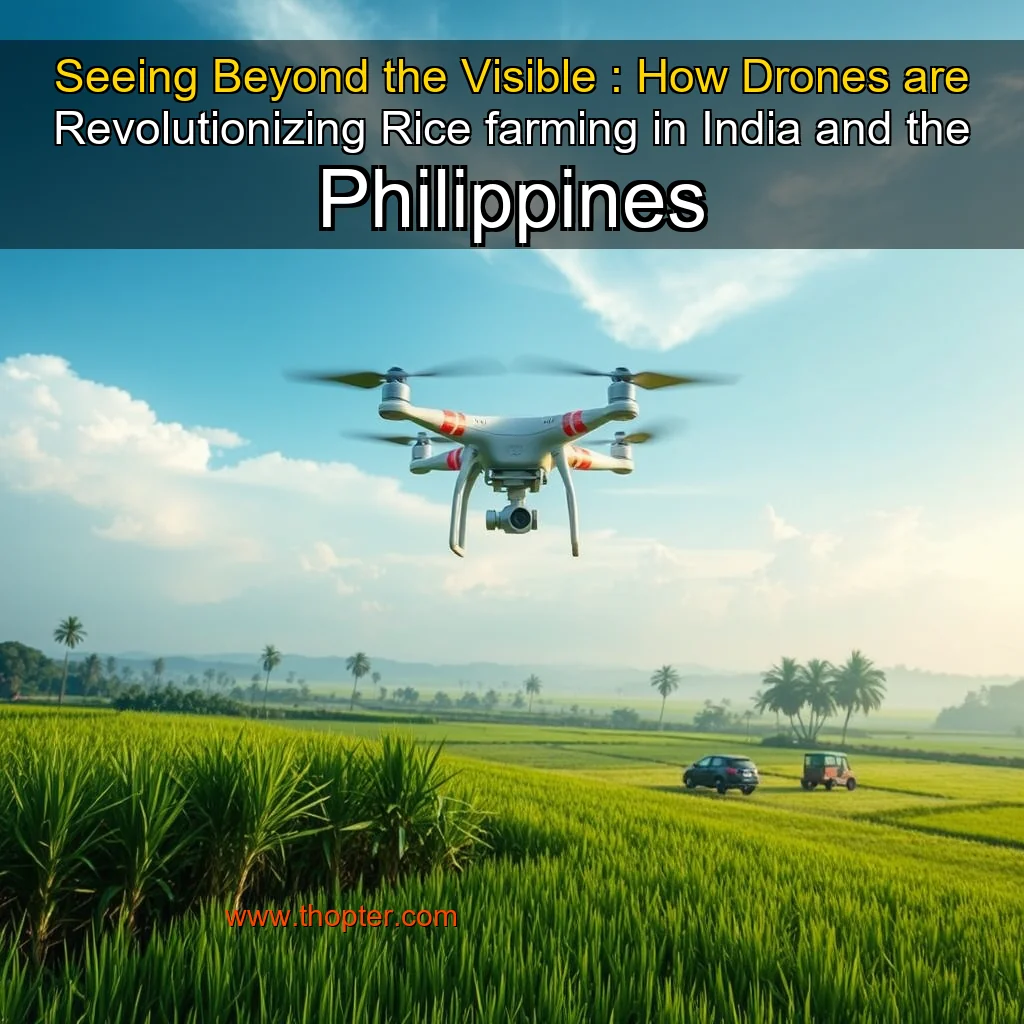
Drones poised to revolutionize agriculture with increased crop yields and reduced labor costs.
This disparity highlights the significant potential of drones in agriculture.
The Rise of Agricultural Drones
The use of drones in agriculture has been on the rise over the past decade, with the market expected to grow significantly in the coming years. According to a report by MarketsandMarkets, the global agricultural drone market is projected to reach US $1.1 trillion by 2027, growing at a CAGR of 34.6% from 2020 to 2027.
Key Drivers of the Market
Several factors are driving the growth of the agricultural drone market. These include:
To realize this potential, the International Rice Research Institute (IRRI) is working to integrate drones with other technologies to create comprehensive solutions for farmers. These include internet of things (IoT) devices, information and communication technology (ICT) advancements, and artificial intelligence (AI). The unique challenges influencing drone adoption As rice farming is a cornerstone of agriculture in both India and the Philippines, each country exhibits distinct characteristics in terms of scale, challenges, and farmer demographics. Though both geographies are embracing drone technology to enhance rice cultivation, the application and impact of these technologies differ significantly due to distinct agricultural landscapes, socio-economic conditions, and policy frameworks. India, being one of the largest rice producers globally, has over 145 million farmers, with approximately 45 million hectares dedicated to rice cultivation. However, Indian rice farmers face challenges such as water scarcity, outdated farming practices, and pest infestations.
Large-Scale Adoption in India
The Indian government has been actively promoting large-scale adoption of precision agriculture techniques to optimize the vast rice-growing areas in the country. Key initiatives include:
- The National Mission for Sustainable Agriculture (NMSA)
- The National Programme for High Yield and Water Conservation (NPHWYC)
- The National Centre for Precision Agriculture (NCPA)
- The Krishi Shakti scheme
- The Pradhan Mantri Krishi Sinchayee Yojana (PMKSY)
These initiatives aim to improve crop yields, reduce water consumption, and increase efficiency in rice cultivation.
Precision Agriculture in India’s Rice-Growing Regions
Key Benefits
Challenges and Limitations
The Rise of Drone Technology in Indian Agriculture
The Indian government has been actively promoting the use of drones in agriculture through various initiatives and policies. One such initiative is the “Drones for Agriculture” program launched by the Ministry of Agriculture and Farmers Welfare in 2018. This program aims to promote the use of drones in precision farming, crop monitoring, and yield prediction.
Key Features of the Program
Private Sector Participation
Private companies have also been playing a significant role in promoting the adoption of drone technology in Indian agriculture. Companies like SkyeTrak, FarmWise, and PrecisionHawk are providing drones and services to farmers, helping them to improve their yields and reduce costs.
Benefits of Drone Technology for Farmers
Harnessing the Power of Drones in Indian Agriculture to Boost Efficiency and Productivity.
However, there are some notable examples of successful drone-based solutions in Indian agriculture.
Successful Drone-Based Solutions in Indian Agriculture
Crop Monitoring
Soil Analysis
The Department of Agriculture (DOA) is encouraging the adoption of drones in agriculture to enhance efficiency, reduce costs, and improve crop yields. The government has launched initiatives to provide training and support to farmers to help them understand the benefits and use drones effectively. The government has also established a task force to oversee the development and deployment of drones in agriculture. This task force is responsible for developing standards, guidelines, and regulations for the use of drones in agriculture. The goal is to ensure that the use of drones in agriculture is safe, secure, and environmentally friendly. The task force also works with private companies to promote the adoption of drones in agriculture. The DOA has partnered with private companies to provide training and equipment to farmers. The partnership aims to increase the adoption of drones in agriculture and improve the efficiency of farming operations. The training programs cover topics such as drone operation, data analysis, and precision agriculture. The equipment provided includes drones equipped with cameras, sensors, and other technologies that can be used for crop monitoring and management. The government has also launched initiatives to provide incentives to farmers who adopt drones in agriculture.
Drone pilots must also contend with the challenges of navigating through dense forests and overgrown vegetation, which can obstruct the drone’s line of sight and make it difficult to maintain a stable flight path. In addition, the country’s rural areas often lack the necessary infrastructure, such as roads and communication networks, making it difficult for drones to access and transmit data. Despite these challenges, the use of drones in agriculture has been increasing in the country, with many farmers adopting the technology to improve crop yields and reduce costs. The use of drones equipped with sensors and cameras can help farmers monitor crop health, detect pests and diseases, and identify areas where irrigation is needed.
Harnessing the Power of Drones for Sustainable Farming Practices.
Drones can also be used to monitor crop health and detect early signs of pests and diseases, enabling farmers to take proactive measures to prevent damage. Additionally, drones can be used to create detailed maps of agricultural land, helping farmers to optimize crop yields and reduce waste.
The Potential of Drones in Agriculture
A New Frontier for Sustainable Farming
The integration of drones in agriculture has the potential to revolutionize the way farmers manage their crops, reducing the environmental impact of farming while increasing productivity. By leveraging the capabilities of drones, farmers can make data-driven decisions, optimize crop yields, and minimize waste.
Key Benefits of Drones in Agriculture
Collaboration and Knowledge Sharing
India and the Philippines can collaborate to share insights and accelerate the adoption of drones in agriculture. By working together, both countries can:
Precision farming with VRTs optimizes crop yields and reduces waste.
However, the benefits of VRTs can be substantial, and the costs can be mitigated with careful planning and investment.
Understanding Variable Rate Technology (VRTs)
What are VRTs? Variable Rate Technology (VRTs) is a precision agriculture technique that allows farmers to apply different rates of inputs such as fertilizers, pesticides, and seeds to specific areas of their fields. This technology enables farmers to optimize crop yields, reduce waste, and minimize environmental impact. Key benefits of VRTs:
+ Increased crop yields + Reduced waste and environmental impact + Improved resource allocation + Enhanced decision-making
How do VRTs work? VRTs use a combination of sensors, GPS, and data analytics to collect and analyze data on soil type, moisture levels, and crop health. This data is then used to create detailed maps of the field, which are used to determine the optimal application rates for each area.
Table 1. Types of drone-mounted sensors and their agricultural applications