
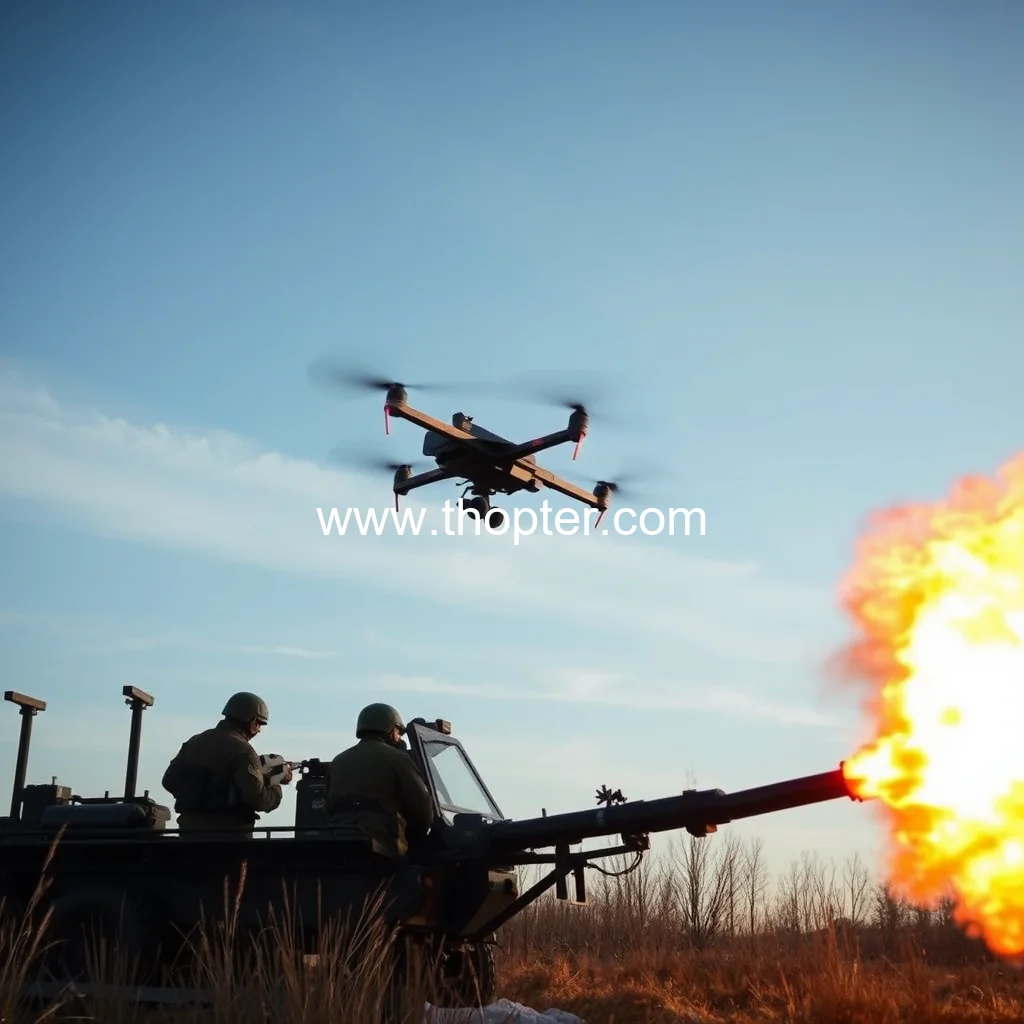
The drone, which was reportedly deployed in the conflict in eastern Ukraine, is said to be capable of releasing a stream of fire that can reach up to 30 meters.
The Development of the Flamethrower Drone
The development of the flamethrower drone is a significant development in the ongoing conflict between Russia and Ukraine. According to reports, the drone was designed to counter the use of first-person-view (FPV) drones by Ukrainian forces. FPV drones are equipped with cameras and can provide real-time video feed to the pilot, allowing for more accurate targeting and coordination.
Key Features of the Flamethrower Drone
The Implications of the Flamethrower Drone
The development of the flamethrower drone has significant implications for the ongoing conflict in eastern Ukraine. The drone’s ability to release a stream of fire can potentially cause significant damage to Ukrainian forces and infrastructure.
The Origins of the Russian Countermeasure
The Russian countermeasure is believed to have been developed in response to the Ukrainian military’s use of FPV (First Person View) drones to spray thermite over forested areas. This tactic has been used to clear vegetation and create a clear line of sight for artillery fire.
The drone’s battery life is also limited, with estimates suggesting it can only fly for around 30 minutes. This means that the Russian drone is not well-suited for long-range missions or sustained operations.
The Russian Drone: A Limited but Capable Asset
The Russian drone, also known as the “Orangutan,” is a relatively new addition to the Russian military’s arsenal. Its capabilities and limitations have been the subject of much speculation and debate. In this article, we will delve into the details of the Russian drone, exploring its strengths and weaknesses, and examining its potential role in modern warfare.
Technical Specifications
The Russian drone’s technical specifications are impressive, but its limitations are equally significant. The drone’s payload capacity is limited to just 1 kg (2.2 lbs) of flammable solution, which is barely sufficient for a single sortie before needing to be refilled.
The Rise of Fire-Dropping FPVs in Ukraine
The deployment of fire-dropping FPVs by Ukrainian forces in early September marked a significant development in the ongoing conflict. As military analysts have noted, these systems serve two primary purposes: they can provide a cost-effective means of detecting enemy positions, and they also have a profound psychological impact on the adversary.
Cost-Effective Detection

news is a contributor at Thopter. We are committed to providing well-researched, accurate, and valuable content to our readers.