The Need for Real-Time Insights into Animal Behavior
Wildlife ecologists often face significant challenges in studying animal behavior in the wild. One major issue is the potential for human noise to disrupt the natural behavior of the animals being studied. However, autonomous drones, with their ability to gather data much more quietly than traditional aerial vehicles, offer a powerful tool for researchers to overcome these limitations.
Introducing WildWing: A Customizable, Open-Source UAS
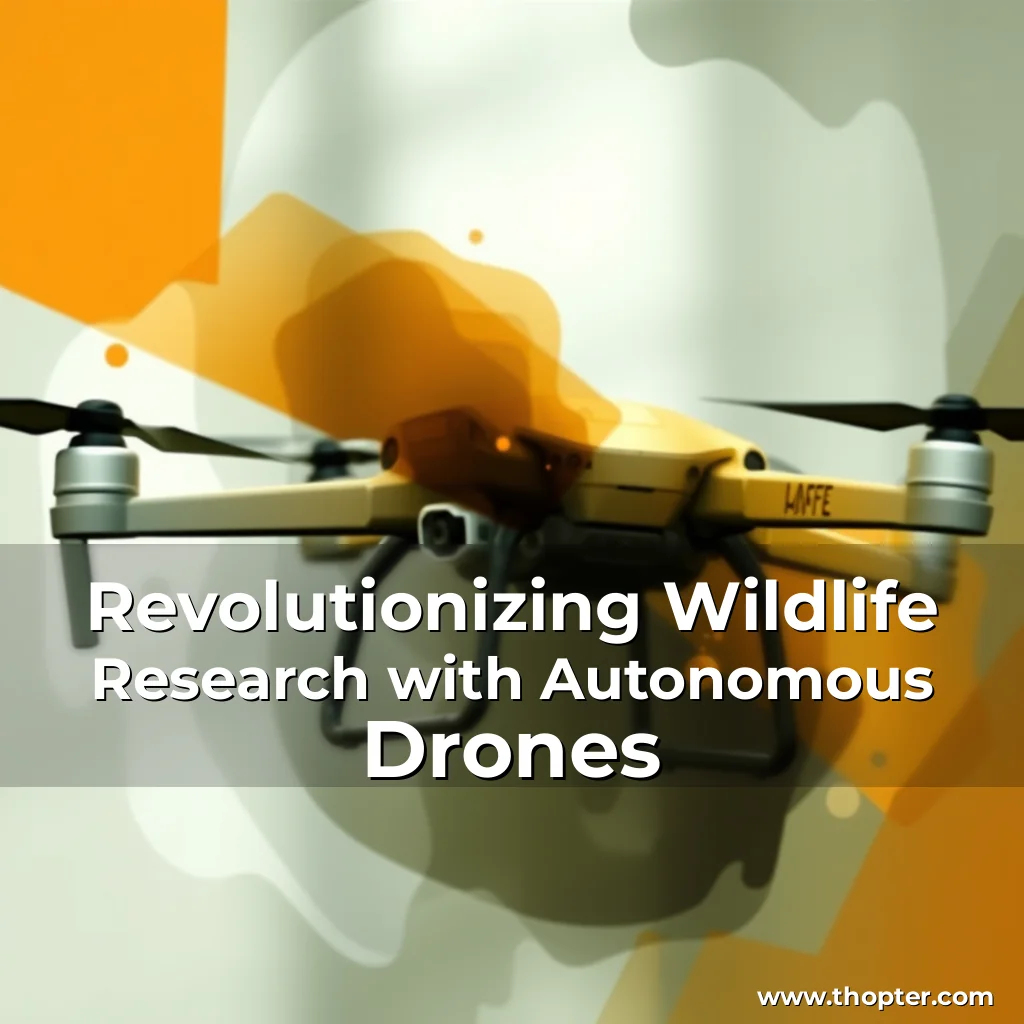
Researchers at The Ohio State University have developed WildWing, a complete hardware and software open-source UAS designed to independently collect dense animal behavioral data. This single-drone system has already collected approximately 37,000 images of various endangered animals, demonstrating its potential to automate and standardize data for better behavioral analysis.
Key Features of WildWing
- Automated classification and data handling, allowing researchers to focus on scaling up research objectives rather than the technical demands of piloting
- Custom software, trained on data gathered at Mpala Research Center in Kenya
- Ability to track and position animals using computer vision
- Quiet operation, reducing human noise disruption to animals
Field Tests and Results
Field tests were conducted at The Wilds conservation park in Ohio, where the WildWing drone was tasked with tracking groups of zebras, giraffes, and Przewalski’s horses. The results showed that the drone’s navigation system was able to match target tracking by a human-operated UAS 87% of the time. Additionally, the number of usable frames, or images with adequate resolution to assess each animal’s behavior, approached nearly 100%.
| Human-operated UAS | WildWing Drone | Success Rate (%) |
| 87% | 87% |
Advantages of Autonomous Drones in Wildlife Research
- Increased reliability and consistency of data, allowing for more accurate behavioral analysis
- Ability to collect data in challenging terrains and complete complex tracking and positioning tasks
- Reduced human noise disruption to animals, enabling more natural behavior to be observed
The Future of WildWing and Ecological Research
The WildWing system’s data and tracking algorithm will be made available to researchers and citizen scientists alike, paving the way for continued improvement and expansion of the system. The team plans to integrate more complex, long-term datasets into WildWing, as well as deploy the system into new environments to test its broader ability to advance ecological research.
Quote from Jenna Kline
“Technology can give us a bigger piece of the puzzle to understand what’s happening in our ecosystem. So I’m excited to keep pushing the boundaries of it to better understand and protect our natural world.”
Conclusion
The development of WildWing, an autonomous drone system designed for wildlife research, represents a significant breakthrough in the field. By providing real-time insights into animal behavior and reducing human noise disruption, WildWing has the potential to revolutionize our understanding of the natural world. As researchers continue to refine and expand the system, we can expect to see even more innovative applications of autonomous drones in ecological research.

news is a contributor at Thopter. We are committed to providing well-researched, accurate, and valuable content to our readers.