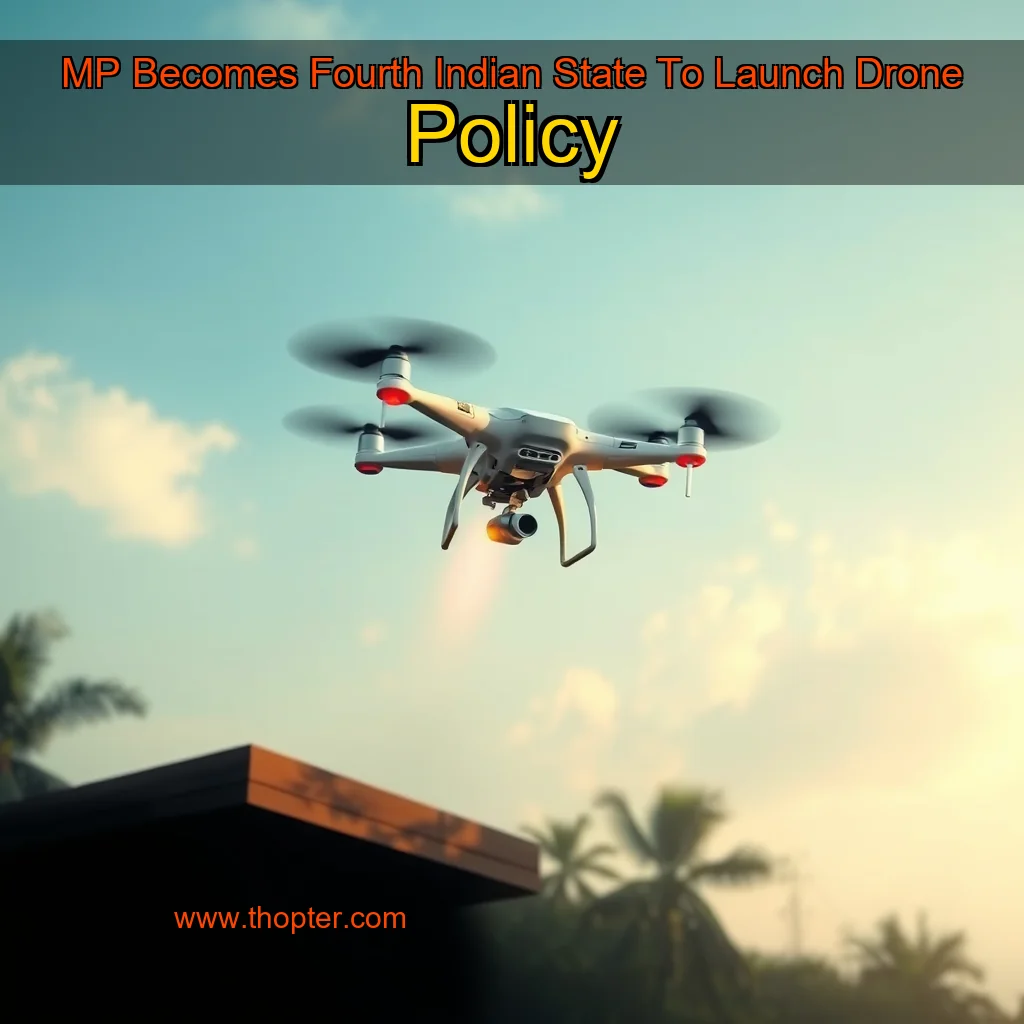
Madhya Pradesh (MP) has become the fourth state to introduce a drone policy – the Madhya Pradesh Drone Promotion and Use Policy, 2025, aimed at attracting investment in the drone sector. The state plans to establish itself as a major hub for drone manufacturing and technology. Over the next five years, it aims to attract an estimated investment of Rs. 370 crore. As part of MP’s policy, a drone data repository will be created to facilitate the use of drone technology. This platform will centralize the government’s drone data and imagery in line with the Prime Minister’s Gati Shakti initiative. Notably, data from the Gati Shakti initiative is now accessible to the private sector.
The Future of Data Sharing in the Drone Industry
The integration of drones into various industries has led to an explosion of data generation. However, the lack of standardized data repositories has hindered the efficient sharing of this data.
The Impact of Deregulation on the Geospatial Sector
The deregulation of the geospatial sector has had a significant impact on the industry. With the removal of approval requirements, Indian private companies can now freely collect and utilize geospatial data, leading to increased efficiency and productivity. Key benefits of deregulation: + Increased efficiency and productivity + Reduced costs and increased competitiveness + Enhanced innovation and entrepreneurship + Improved data quality and availability
The Rise of Private Sector Participation
The deregulation has led to a significant increase in private sector participation in the geospatial sector. Indian private companies are now able to collect and utilize geospatial data without the need for government approvals, allowing them to focus on innovation and entrepreneurship. Examples of private sector companies: + MapMyIndia + Gaana + Paytm
+ Increased investment and funding + Improved data quality and availability + Enhanced innovation and entrepreneurship
The Role of Technology in Deregulation
Technology has played a crucial role in the deregulation of the geospatial sector.
These centres will provide training and certification programs for the drone industry. The government aims to create a skilled workforce that can compete globally. The drone technology is expected to create over 1 million jobs and generate $11 trillion in revenue by 2050. The government is also investing in infrastructure development, including drone landing pads and charging stations, to support the growth of the drone industry. Additionally, the government has proposed several policies to promote the use of drones in various sectors such as agriculture, construction, and disaster response.
Step 1: Understanding the Context of Drone Technology in India
India has set ambitious targets to advance drone technology and build a skilled workforce to compete globally.
Step 2: The Role of Public-Private Partnerships in Drone Education
The government plans to set up drone schools through public-private partnerships.
15 crore. Land Acquisition: 100% reimbursement for land acquisition costs, up to a maximum of Rs.
Indian Government Launches R&D Project Grant to Support Innovative Projects in Various Sectors.
Introduction
The Indian government has introduced a new initiative to support research and development (R&D) projects in various sectors. The program aims to provide financial assistance to projects that align with the state government’s identified areas of focus. This article will delve into the details of the R&D project grant and the internship program under the CM Seekho Kamao Yojana.
R&D Project Grant
The R&D project grant is a significant initiative by the Indian government to support innovative projects in various sectors. The grant provides up to Rs. 2 crore to projects that align with the state government’s identified areas of focus. These areas may include:
Eligibility Criteria
To be eligible for the R&D project grant, applicants must meet the following criteria:
The Rise of Drone Technology in India
The Indian government has been actively promoting drone technology, recognizing its potential to transform various sectors such as agriculture, infrastructure, and disaster management. The Namo Drone Didi Scheme, launched in 2020, is a significant initiative aimed at boosting drone adoption and development in the country.
Key Features of the Namo Drone Didi Scheme
Benefits of Drone Technology in India
Drone technology has the potential to bring about significant benefits in various sectors, including:
Challenges and Limitations
While drone technology has the potential to bring about significant benefits, there are also challenges and limitations that need to be addressed, including:
The DGCA has also approved 1,500 drone training programs across the country.
Introduction
The Indian government has taken significant steps to promote the use of drones in the country, with a focus on increasing safety and efficiency.
Read More: India Registers Over 10,000 Commercial Drones, 86% of Airspace Open for Operations

news is a contributor at Thopter. We are committed to providing well-researched, accurate, and valuable content to our readers.