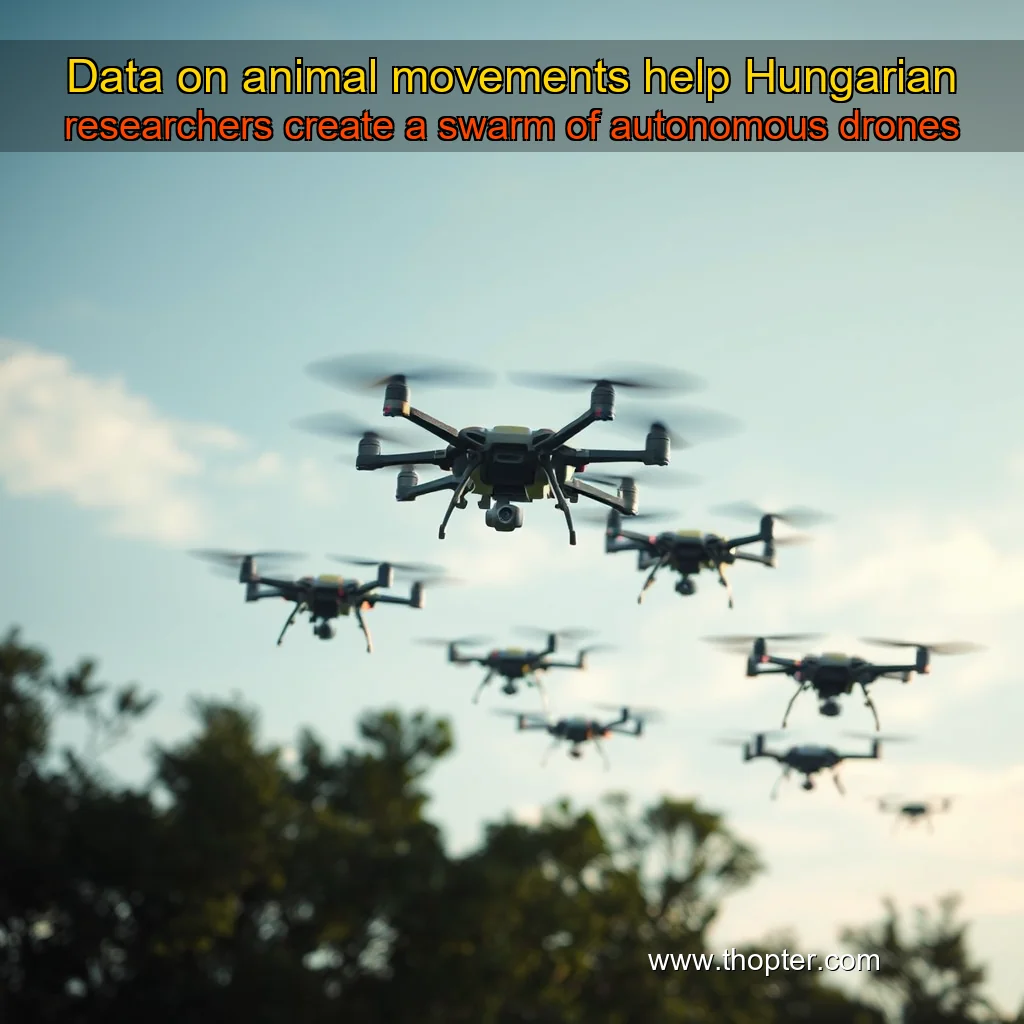
Data on animal movements help Hungarian researchers create a swarm of autonomous drones
The Inspiration Behind the Swarm
The concept of the swarm is inspired by the collective movements of creatures such as birds, fish, and even insects. These creatures have evolved to work together to achieve a common goal, often resulting in impressive displays of coordination and agility. By studying these natural phenomena, Hungarian scientists have developed a system to replicate this collective behavior in a swarm of drones. The research team, led by Dr. László Kardos, has been studying the movements of birds for several years. They have developed a sophisticated algorithm that can analyze the behavior of individual birds and predict the movements of the entire flock. Similarly, the team has also studied the movements of schools of fish and swarms of insects. By analyzing these natural systems, they have gained insights into how to create a cohesive and coordinated swarm of drones.*
The Swarm in Action
The swarm of 100 drones is equipped with advanced sensors and communication systems that allow them to work together seamlessly. The drones are programmed to follow a set of rules and guidelines that are designed to mimic the natural behavior of the creatures that inspired the swarm. The drones are equipped with GPS and accelerometers that allow them to track their position and velocity in real-time. The drones also have advanced communication systems that enable them to share information and coordinate their movements.
The Science Behind the Models
The researchers used a combination of machine learning algorithms and artificial intelligence to create the models. They drew inspiration from the way animals, such as birds and insects, communicate and coordinate with each other. By studying these behaviors, the scientists were able to develop a system that mimics the complex interactions between animals in the wild. Key features of the models include:
The Potential Applications
The new models have the potential to revolutionize various industries, including:
The drones equipped with these models can perform tasks such as:
The Future of Drone Technology
The development of these new models marks a significant milestone in the evolution of drone technology. As the field continues to advance, we can expect to see even more sophisticated and capable drones in the future. The potential applications of these models are vast, and it’s likely that we’ll see them being used in a wide range of industries and applications. The future of drone technology is exciting and full of possibilities. With the development of these new models, we can expect to see drones becoming increasingly autonomous and capable of performing complex tasks.
Harnessing Nature’s Navigation Secrets to Revolutionize Drone Flight.
The Inspiration Behind the Algorithm
The researchers drew inspiration from the natural world to develop their algorithm. By studying the behavior of animals, they were able to identify patterns and characteristics that could be applied to drones. The pigeons, for example, were found to have a unique way of navigating through the city, using visual cues to avoid obstacles and find food. The wild horses, on the other hand, were observed to have a more complex and dynamic movement pattern, with a greater emphasis on adaptability and flexibility. The researchers used machine learning techniques to analyze the data gathered from the animal movements, identifying key features and patterns that could be applied to drones. The algorithm was tested on a variety of drone models, with varying levels of success. The results showed that the algorithm was able to make accurate decisions in a range of scenarios, from navigating through crowded skies to avoiding obstacles.
The Potential Applications of the Algorithm
The potential applications of the algorithm are vast and varied.
The Breakthrough Technology
The Hungarian researchers have developed a technology that can convert CO2 into oxygen at an unprecedented rate. This innovation has the potential to significantly impact various sectors, including energy, transportation, and construction.
How it Works
The technology uses a novel approach to split CO2 molecules into oxygen and other gases. This process is made possible by a proprietary catalyst that enhances the reaction rate. The catalyst is designed to work at a lower temperature than traditional methods, reducing energy consumption and increasing efficiency.
Potential Applications of Autonomous Drones
The researchers’ algorithm, which they call “SwarmMind,” is designed to enable multiple drones to work together seamlessly, sharing data and coordinating their actions in real-time. This allows for a range of potential applications, including: