The concept of an “economy” has been defined by economists as the art and science of marshaling scarce resources to meet our needs. However, land has been built out, seas and oceans have become busy highways, but airspace remains largely idle. Unlocking the Potential of Low-Altitude Airspace
The low-altitude airspace below the clouds is a critical resource that has hardly been exploited. For China, opening up this realm to commercial, private and public use is not just an exciting technological option, but a strategic imperative.
- China’s low-altitude economy is set to revolutionize the way we travel, with flights becoming as commonplace as availing a ride-hailing cab.
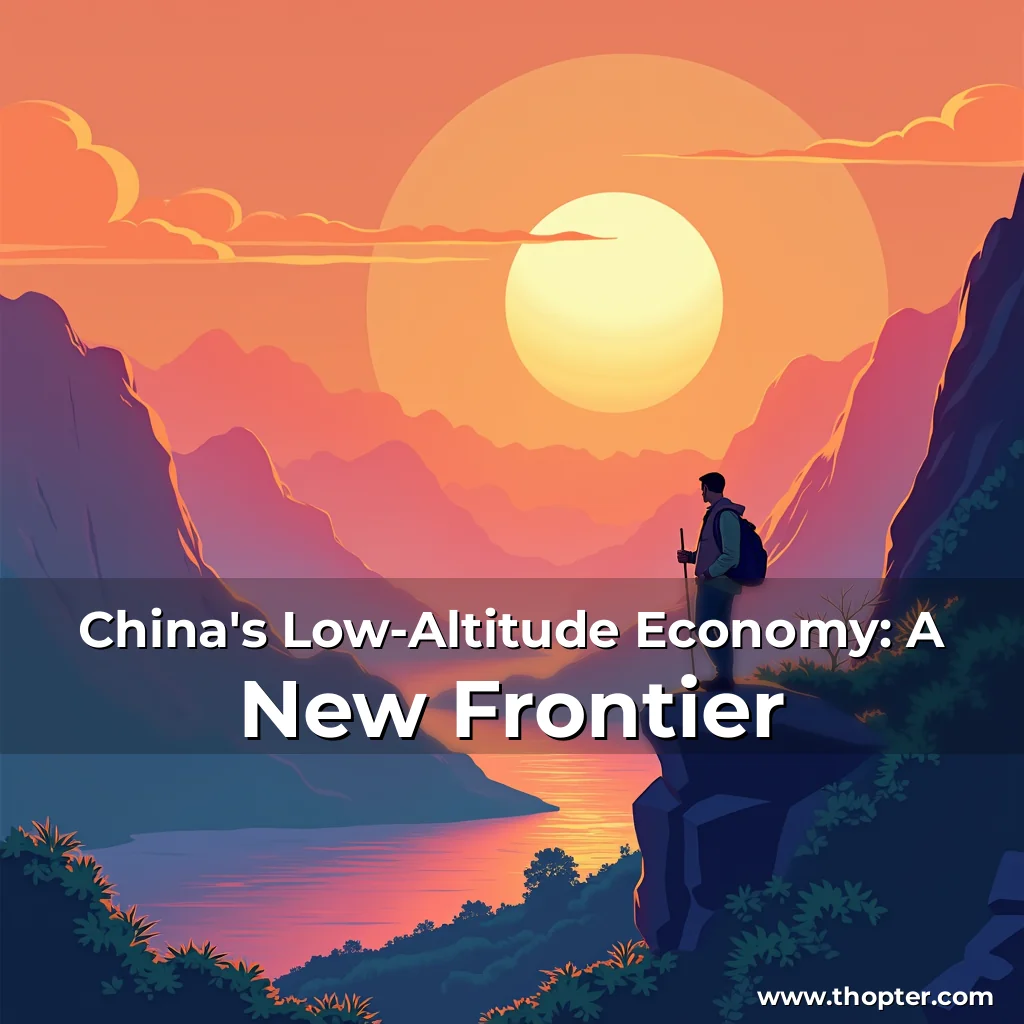
- The concept of a “low-altitude economy” is a new frontier that will transform industries, daily life and the map of possibility in three dimensions.

“The low-altitude economy has the potential to act as an aerodynamic overlay on our existing industries, transforming them from two to three dimensions.”
Key Players and Technologies
More than 30 Chinese firms are now developing full-scale eVTOL platforms. Companies such as EHang and AEROHT (an XPENG spin-off) are at the forefront of domestic eVTOL development. Their innovations span battery technology, autonomous flight control and noise-reduction mechanisms, which help overcome both technological and regulatory hurdles.
| Company | Product | Technology |
|---|---|---|
| EHang | eVTOL | Autonomous flight control |
| AEROHT | eVTOL | Noise-reduction mechanisms |
Regulatory Framework and Public Trust
A robust regulatory framework is necessary to monitor low-altitude air-traffic corridors, manage stringent maintenance and pilot-licensing regimes, and engage communities to address problems such as noise pollution. For example, there is a need to implement measures like “quiet-zone” hours, set maximum decibel levels and create no-fly buffers around schools and hospitals.
Impact and Benefits
The low-altitude economy will signal a paradigm shift, elevating industries, transforming daily life and redrawing the map of possibility in three dimensions. It will also facilitate:
- De-congested cities
- Faster emergency response
- Vitalized rural connectivity
Conclusion
The low-altitude economy is a new frontier that will transform industries, daily life and the map of possibility in three dimensions. As the world looks to the skies, it will be exciting to see how this technology evolves and what benefits it brings to our daily lives.

news is a contributor at Thopter. We are committed to providing well-researched, accurate, and valuable content to our readers.