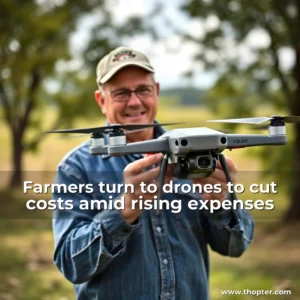

The Sky’s the Limit: How Agricultural Drones Are Revolutionizing Modern Farming Practices
In an era where technology meets tradition, agricultural drones have emerged as game-changers in modern farming practices. These sophisticated flying machines are transforming how farmers manage their crops, monitor fields, and optimize yields across diverse terrains.
Farmers who once relied solely on manual labor and traditional methods now find themselves at the forefront of technological innovation. With the integration of advanced sensors, GPS navigation systems, and AI-driven analytics, agricultural drones offer unprecedented precision and efficiency that were previously unimaginable in agriculture.
Understanding the Technology Behind Agricultural Drones
Agricultural drones represent a convergence of cutting-edge technologies designed specifically for agronomic applications. Unlike consumer-grade drones used primarily for photography or recreation, these specialized devices incorporate high-resolution cameras, multispectral imaging sensors, and real-time data processing capabilities tailored to farm management needs.
The core components enabling their functionality include quadcopter frames equipped with powerful brushless motors capable of lifting heavy payloads such as pesticide sprayers or seed dispersal mechanisms. Advanced flight control systems ensure stability even under challenging weather conditions commonly encountered in open fields.
- Sensors: High-resolution RGB cameras capture visual data while multispectral and hyperspectral sensors detect plant health indicators invisible to human eyes.
- Data Processing Units: Onboard computers analyze collected information using machine learning algorithms to identify patterns related to crop growth stages or pest infestations.
Battery life has significantly improved over recent years through innovations in lithium polymer battery technology allowing extended operational times crucial for covering vast farmland areas without frequent recharging stops.
Communication modules enable seamless connectivity between ground stations and aerial platforms ensuring operators can remotely monitor drone activities from smartphones or tablets located anywhere within range.
Applications of Agricultural Drones Across Various Farm Operations
Drones find application in numerous facets of agricultural operations ranging from initial land preparation right up until harvest time. Their versatility makes them invaluable tools not only during peak growing seasons but also throughout every phase of crop development cycles.
Crop monitoring remains one of the most critical uses where regular aerial surveys help track progress against expected growth benchmarks. By analyzing changes in vegetation indices derived from satellite imagery combined with drone footage, farmers gain early warnings about potential issues before they become visible on-site inspections.
Precision spraying techniques enabled by autonomous drones reduce chemical usage substantially compared to conventional tractor-mounted applicators which often result in uneven distribution due to terrain variations affecting spray pattern consistency.
Case Study: Precision Spraying in Large-Scale Farms
In California’s Central Valley region known for its expansive vineyards, a leading winery implemented automated drone-based herbicide application systems resulting in reduced chemical runoff by approximately 68% while maintaining optimal weed suppression levels.
This reduction wasn’t merely environmental—it translated directly into cost savings for the company through minimized waste and lower regulatory compliance expenses associated with excessive pesticide use beyond permitted thresholds set by local authorities.
Moreover, the targeted approach ensured healthier soil composition by avoiding unnecessary chemical saturation contributing positively towards long-term sustainability goals aligned with organic certification standards being pursued actively by several agribusinesses today.
The success story highlights how intelligent automation paired with precise targeting capabilities enables sustainable resource utilization without compromising productivity metrics essential for commercial viability.
Benefits of Implementing Drone Technology in Agriculture
The adoption of agricultural drones brings forth a multitude of benefits spanning economic advantages, environmental conservation efforts, and enhanced decision-making processes grounded in empirical evidence rather than guesswork alone.
Economically speaking, the ability to cover large tracts efficiently reduces overall labor costs traditionally associated with hiring crews for repetitive tasks like scouting or applying fertilizers manually across sprawling landscapes.
Environmental gains stem largely from optimized input application rates achieved via site-specific variable rate technology wherein nutrients or pesticides get applied exactly where needed based upon actual field variability instead of blanket treatments applicable everywhere uniformly regardless of micro-climatic differences present within any given plot.
This targeted method minimizes ecological footprints caused by excess chemicals seeping into groundwater sources or contaminating non-target species habitats thereby promoting biodiversity preservation alongside water quality maintenance initiatives undertaken globally nowadays.
Challenges Faced During Implementation of Agricultural Drones
Despite promising advancements witnessed thus far regarding agricultural drone implementations worldwide, challenges persist concerning both technical limitations inherent within current platform designs along with socio-economic barriers hindering widespread adoption among smaller scale producers particularly those operating in developing economies lacking robust infrastructure support networks necessary for efficient deployment strategies.
Technical constraints include limited payload capacities restricting what types of equipment can be mounted aboard standard-sized units making certain operations impractical unless larger models better suited for heavier loads come into play—however increased size typically correlates negatively with maneuverability especially when navigating densely populated crop rows close together.
Socioeconomic factors involve significant upfront capital investment required purchasing state-of-the-art hardware coupled with ongoing maintenance expenditures plus training programs aimed at equipping users with requisite skills needed proficiently operate complex machinery requiring understanding digital interfaces managing geospatial datasets interpreting analytical outputs generated automatically post-flight missions.
Additionally, there exists considerable variation in regulatory frameworks governing airspace access permissions varying widely depending upon jurisdictions creating additional hurdles necessitating thorough legal consultations prior initiating any drone operation plans involving commercial intent.
The Future Outlook for Agricultural Drones
Looking ahead, emerging trends suggest continued evolution toward greater autonomy integrated seamlessly within existing farm ecosystems leveraging Internet of Things (IoT) principles connecting various smart devices deployed throughout cultivation zones enhancing situational awareness continuously monitored centrally via cloud computing architectures supporting predictive modeling approaches anticipating future requirements proactively rather than reacting passively after problems arise unexpectedly.
Rapid developments occurring simultaneously in artificial intelligence research promise imminent breakthroughs facilitating self-learning algorithms adapting dynamically according to changing environmental parameters observed firsthand through embedded sensor arrays collecting continuous streams of vital biometric signals indicative of crop vitality statuses.
Such enhancements will empower growers possessing minimal technical expertise still achieve exceptional results simply by deploying pre-programmed routines executed flawlessly without needing deep comprehension underlying mathematical formulations powering successful execution pathways guiding mechanical actions taken autonomously beneath skyward canvases above fertile earth below.
Simultaneously, miniaturization trends forecasted soon could lead production lines manufacturing compact yet highly functional variants suitable for smallholder enterprises benefitting immensely from affordable options accessible even budget-conscious stakeholders eager explore digital transformation opportunities available now more than ever before.
Getting Started with Agricultural Drones: A Practical Guide
For those contemplating entering the realm of drone-assisted agriculture, careful consideration must first occur determining exact objectives seeking enhancement vis-a-vis current methodologies already established within respective operations environments irrespective whether transitioning wholly away from legacy systems entirely or augmenting existing workflows incrementally adopting new paradigms gradually.
Selecting appropriate hardware depends heavily upon intended purposes—those focusing mainly on reconnaissance duties might prefer lightweight models emphasizing portability whereas individuals prioritizing intensive chemical delivery responsibilities require sturdier builds constructed utilizing reinforced materials resistant corrosion caused prolonged exposure elements typical outdoor working conditions frequently experienced.
Software compatibility constitutes another pivotal factor influencing final choices since effective integration demands harmonious synchronization between chosen platform firmware versions matching closely available mapping software suites providing accurate topographical representations assisting route planning exercises conducted beforehand commencing actual flights scheduled accordingly thereafter.
Training resources remain indispensable assets ensuring safe handling procedures strictly adhered minimizing risks entailed mishandling sensitive equipment potentially damaging expensive components irreparably should accidents occur despite precautions meticulously followed diligently throughout entire lifecycle duration each individual unit serves faithfully until eventual decommissioning occurs naturally following service life expiration dates specified manufacturer warranties included initially upon purchase agreements signed legally binding contracts formalizing ownership transfers officially recognized authoritative bodies overseeing relevant industries nationwide.
Community Engagement & Innovation in Agricultural Drone Development
The rise of agricultural drones has sparked vibrant communities dedicated to advancing drone technology specifically for farming applications fostering collaborative spirit amongst enthusiasts researchers professionals alike sharing knowledge freely accelerating pace discoveries made collectively surpassing achievements attainable individually confined personal capacities alone.
Online forums serve as hubs facilitating exchange ideas experiences troubleshooting common pitfalls faced newcomers encountering difficulties mastering nuanced aspects involved operating multifaceted apparatuses demanding attention minute details overlooked casual observers unfamiliar inner workings intricate mechanisms propelling these marvels aloft heavens above verdant expanses cultivated patiently generations past.
Workshops organized regularly provide hands-on experience allowing participants grasp fundamentals practically engaging active experimentation testing theories developed theoretically earlier stages theoretical exploration phases preceding implementation trials conducted controlled settings simulating realistic scenarios replicating authentic field conditions accurately mirroring true-world complexities confronted daily practitioners immersed deeply within profession daily routine schedules dictated seasonal rhythms cyclical nature agriculture itself.
Open-source projects contribute significantly expanding accessibility democratizing innovation empowering grassroots movements driving change bottom-up rather top-down directives issued bureaucratic institutions distant removed direct engagement stakeholders affected decisions ultimately impacting livelihoods sustained dependently upon successful outcomes realized through effective execution strategic initiatives launched purposefully addressing identified gaps shortcomings previous approaches failed adequately resolving satisfactorily sufficient durations satisfactory effectiveness measurements validated scientifically rigorous peer-reviewed studies published reputable journals respected academically esteemed institutions internationally recognized scholarly communities engaged continuous dialogue discourse shaping future trajectories directionality trajectories evolving landscape technological advancement intertwined closely symbiotic relationship mutual reinforcement strengthening foundations supporting pillars sustaining industry prosperity longevity enduring relevance amidst rapidly shifting global dynamics climate change posing unprecedented challenges requiring adaptive solutions resilient enough withstand pressures exerted external forces threatening existence fundamental structures established historically evolved organically overtime periods measured decades centuries.
These collaborative efforts foster not only technical improvements but also cultivate a culture of shared responsibility and collective problem-solving that is essential for the sustainable growth of agricultural drone technology.
Conclusion
The transformative impact of agricultural drones continues to reshape the very fabric of modern farming, offering unparalleled efficiencies, sustainability benefits, and innovative possibilities never before imagined in the sector.
As we look forward, embracing this technology presents an opportunity for farmers worldwide to enhance productivity, conserve natural resources, and adapt to the evolving demands of contemporary agriculture with confidence and foresight.