

The New Battlefield Reality
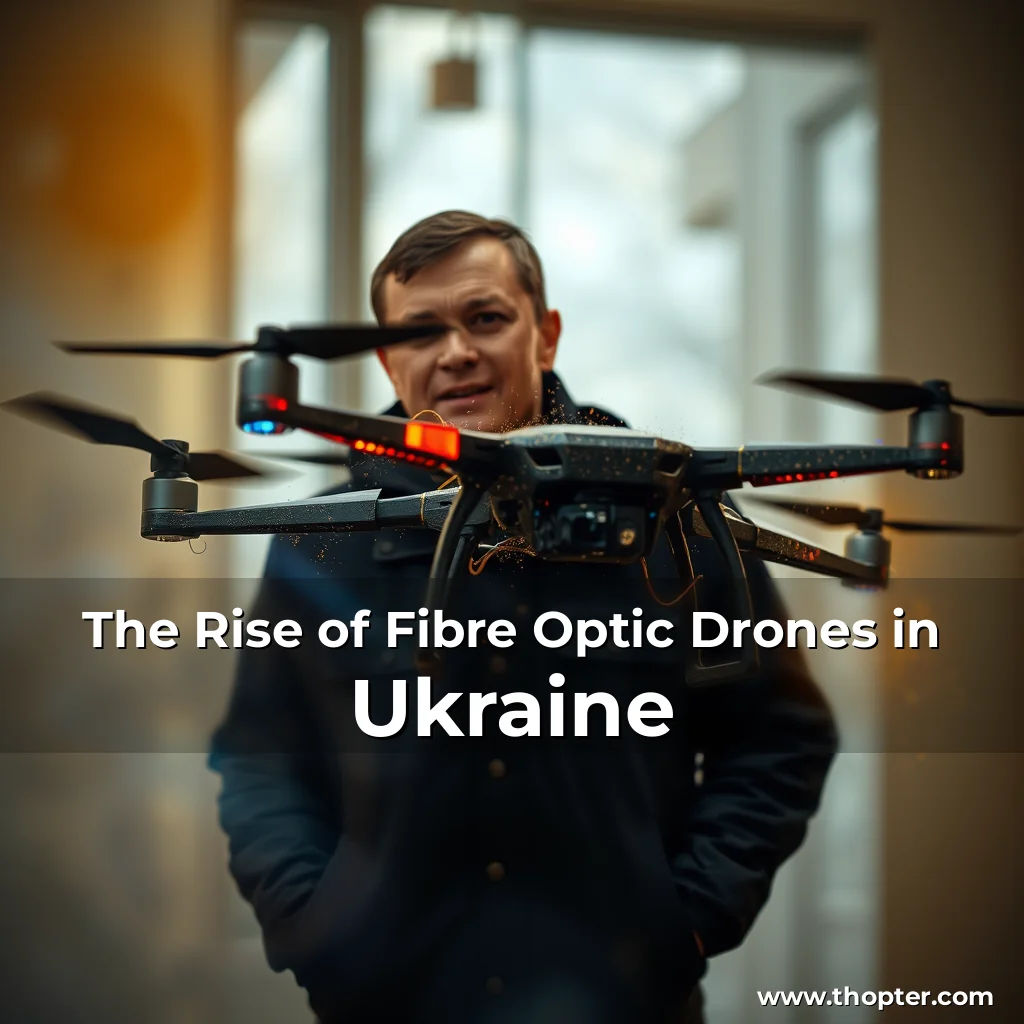
The war in Ukraine has brought new challenges to the battlefield, with the emergence of high-tech fibre optic drones that can sneak into previously thought safe spaces. These drones, equipped with fibre optic cables, can be difficult to detect and are hard to jam, making them a game-changer on the battlefield.
Design and Functionality
At a secret workshop in Ukraine’s north-east, a team of about 20 people assemble hundreds of FPV (first person view) drones, including a new design featuring a cylinder-shaped core with a 10km or 20km long fibre optic cable. This wired kamikaze drone can fly in ways conventional FPV drones cannot, and its low radio connection makes it difficult to jam or detect.
- One of the commanders of a specialist drone unit, the Achilles regiment, Capt Yuriy Fedorenko, notes that fibre optic drones were an experimental response to battlefield jamming and rapidly took off late last year.
- With no radio connection, fibre optic drones cannot be jammed, are difficult to detect, and can fly in ways conventional FPV drones cannot.
Impact on the Battlefield
A video from a Russian military Telegram channel from last month demonstrates the ominous capability of fibre optic drones. A fibre optic drone, the nose of the yellow cylinder housing the coil clearly visible, flies with precision a few centimetres from the ground, to strike a Ukrainian howitzer concealed in a barn, a location clearly previously considered safe.
- Soldiers have quickly come to fear fibre optic drones, which have become a major concern for the guys on the frontline.
- They cannot be jammed and for now, are the main concern for the military.
Advancements and Limitations
As Fedorenko acknowledges, Russia is well ahead of Ukraine in terms of fibre optic drones, largely due to greater access to fibre optic cabling. However, experts estimate that drones of all types contribute to about 70% to 80% of military casualties on both sides. “Since these drones cannot be jammed by electronic warfare, they’re used as a first wave of attack to target adversarial electronic warfare and jamming capability,” said Samuel Bendett, a drone expert with the Center for Naval Analyses.
- Because they are wired, fibre optic drones deliver high-quality images of the target, useful for battlefield intelligence.
- They are also used to clear the way for regular radio-controlled FPV drones to strike.
The Cost and Complexity
The cost of fibre optic drones is high, with the cable adding the same amount as the drone itself. However, the biggest problem is retraining drone pilots, as the craft handles differently. Ten kilometres of fibre optic cable weighs approximately 1.2 to 1.4kg, transforming how the drone flies through the air.
- Dmytro, a workshop employee, notes that each operator will have five or six failed missions in training due to the differences in handling.
- The equipment is also sensitive to damage and contamination with dust.
Countermeasures and Future Developments
Despite the challenges, both sides are developing countermeasures to counter fibre optic drones. The increasingly prevalent netting is designed to entangle the drone and its cables, while Ukraine is also seeking to devise ways to sever or burn the cables. “That is the question everybody asks, if it’s possible to destroy the cable,” says Fedorenko. “I will tell you it’s very strong, but we are working on it.”
Increasing Use and Impact
Ukraine’s president, Volodymyr Zelenskyy, has discussed the fibre optic drones with his senior military commanders, promising to ramp up production as soon as possible. The number of certified drone models with fibre optic control systems has increased, with 11 Ukrainian enterprises mastering the production of such drones.
- Gen Oleksandr Syrskyi, the chief military commander, reported that 77,000 enemy targets were engaged and destroyed by drones of all types.
- Ukraine is deploying fibre optic drones with a kill range of 20km, highlighting the extended battlefield.
Recent Developments
Recently, drones from Ukraine hit a Russian fibre optic factory in Saransk, about 400 miles from the border. A long-range drone targeted the site again the next day.
- There are examples of drone operators tracing the cables back to their launch positions and targeting the enemy crews.
- However, fibre optic drones have not disappeared, as all the talk is of increasing numbers.
“Since the beginning of this year, more than 20 new certified drone models with fibre optic control systems have emerged.