
Revolutionizing Surveillance with 3D-Printed Drones
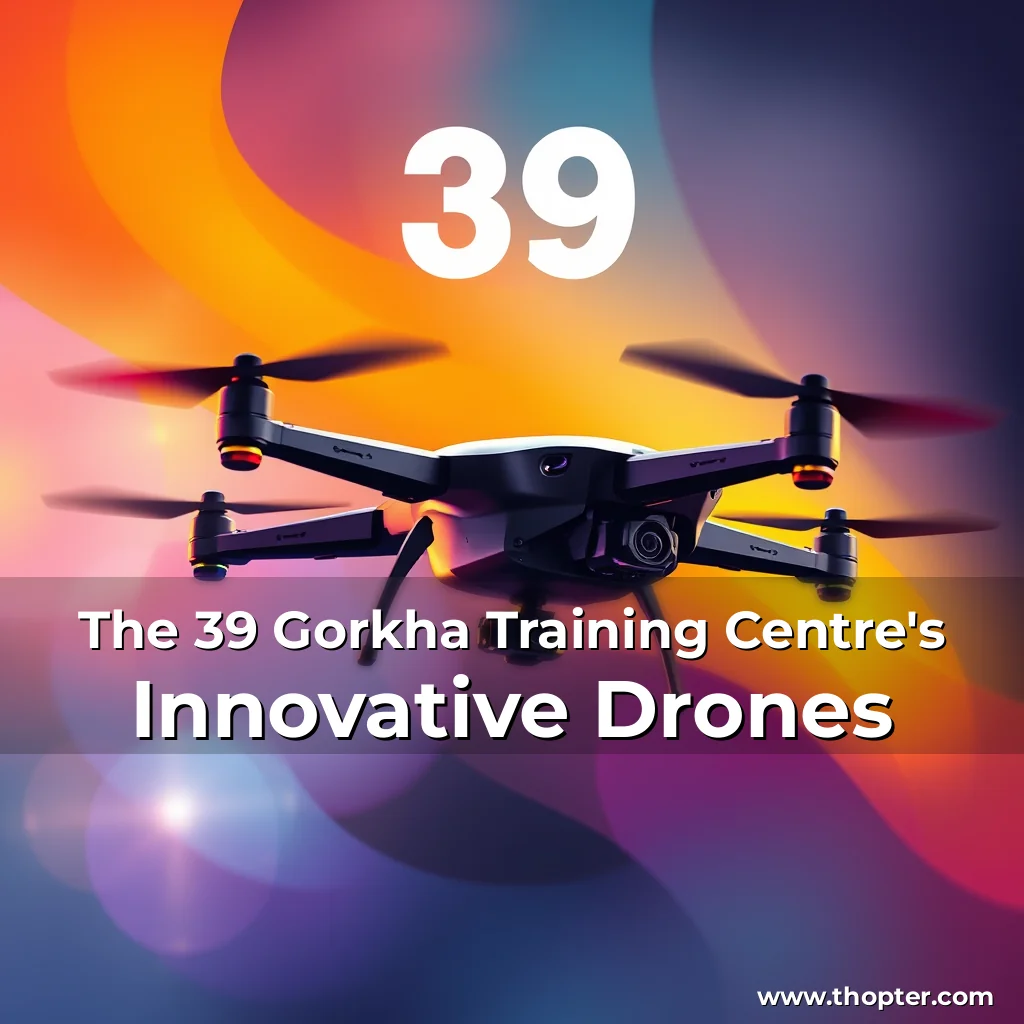
The 39 Gorkha Training Centre in Varanasi, a hub for Army personnel’s innovative projects, has designed and manufactured its own lightweight, 3D-printed surveillance drones. These drones, capable of sending live feeds to ground troops, feature a range of 10 km, a battery life of 20-30 minutes, and VR capabilities.
Key Features and Benefits
• **Range and Battery Life**: The drones have a range of 10 km and an operational battery life of 20-30 minutes, depending on the capacity of the battery fitted. • **VR Capabilities**: They are virtual reality enabled, allowing live feeds to be sent to assist troops on the ground. • **Quick Replacement of Parts**: The drones are designed with easily replaceable parts, allowing for quick maintenance and repair. • **User-Friendly Operations**: The drones work on fusion software, making them easy to operate, even for a class 10th pass infantry soldier.
Manufacturing Process
The drones are designed and manufactured in-house by Army personnel at the centre. The process involves:
- Using 3D printers to make the drone structure.
- Fitting other components, including the battery and flight controller.
Live Demonstration
The drones were showcased during a live demonstration at the Surya Drona Tech-2025 event in Dehradun, where they were seen in front of dignitaries such as Lt Gen Gurmit Singh, General Officer Commanding in Chief of the Army’s central command, and Lt Gen Anindya Sengupta.
Other Innovative Solutions
Apart from the 39 Gorkha Training Centre’s drones, a Gujarat-based firm, Optomized Electrotech, showcased an AI-enabled surveillance camera device called Noctvision. This device can identify individuals in crowds of 5 lakh people by reading their face bone dimensions.
““We are already using the device by Gujarat police and their counterparts in Daman & Diu. It is also equipped with thermal imaging cameras to detect targets in the dark. For detecting a target person in a crowd, one needs to just feed it a previously taken photo of him/her, and it will analyse its face bone dimensions for further action. It can also be used in stopping targeted people from entering any designated place by alerting the handler,” said Shivang Mishra, marketing head of Optomized Electrotech.
Implications and Future Directions
The development of such innovative solutions has significant implications for the military and law enforcement agencies. The use of 3D printing and AI in the manufacturing process can lead to faster production, reduced costs, and increased efficiency. Future Directions
The 39 Gorkha Training Centre plans to develop a wired drone to counter the drone jamming technology deployed to make wireless drones non-operational.
Conclusion
The 39 Gorkha Training Centre’s innovative drones and other solutions showcased at the Surya Drona Tech-2025 event demonstrate the potential of technology in revolutionizing surveillance and security. As the military and law enforcement agencies continue to explore new technologies, it is essential to stay updated on the latest innovations and developments in the field.