
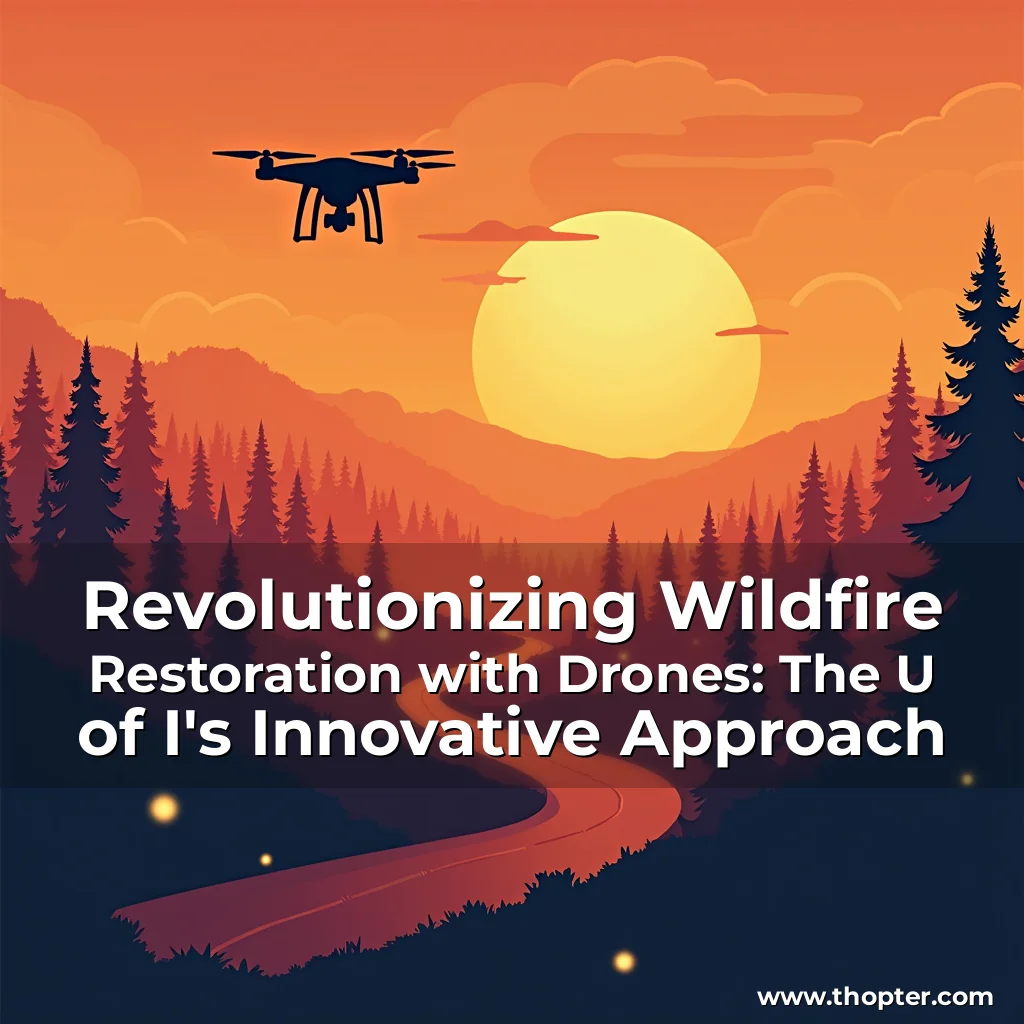
University of Idaho researchers are pushing the boundaries of traditional wildfire restoration methods by leveraging the power of drones to reseed and restore damaged rangeland. The innovative approach has the potential to revolutionize the way we tackle devastating wildfires, particularly in rugged and inaccessible areas.
Background and Problem Statement
Lightning sparked the Glendale Fire in the Wood River Valley on September 2, 2024, scorching sagebrush uplands, meadows, and riparian areas, including the northern 2,000 acres of the University of Idaho’s Rinker Rock Creek Ranch. The research ranch, jointly managed by the College of Agricultural and Life Sciences and the College of Natural Resources, has been a testing ground for various restoration techniques.
- The federal Bureau of Land Management flew a helicopter and aerially seeded 890 burned areas of the ranch last fall with a mixture of grasses, but budgetary constraints limited the scope of the applications.
- University of Idaho researchers have identified a promising new seeding option in a 96-pound multicopter drone with a 9.5-foot diameter, which the college recently purchased using a $75,000 donation from AgWest Farm Credit.
Key Components of the Restoration Project
The restoration project involves assessing stand establishment and weed density of treated areas this spring before planning which areas may require additional seeding or herbicide treatments using the drone. The researchers will also seed previously untreated burn areas with the drone this fall and winter.
- The drone is equipped with radar technology, enabling it to fly at a constant, low elevation above the ground regardless of the type of terrain.
- Prather intends to study the droplet distribution of drone applications for comparison with spray applications using crop dusters, helicopters, and backpack sprayers.
- The restoration project will use high-resolution satellite imagery taken before, during, and after the fire to assess burn severity and determine restoration prescriptions.
Benefits and Advantages of Using Drones in Wildfire Restoration
Prather envisions several benefits of using drones in wildfire restoration, including the ability to target applications more precisely and reduce the risk of damage to sensitive ecosystems. With the drone, the ranch can respond quickly to weed outbreaks, quashing them before they get out of hand.
“With an aircraft you can’t hug the ground as much. I think this drone may have some ability to give us better coverage overall because we can hug the landscape,” Prather said.
Decision-Making and Land Management
The restoration project will develop a “decision matrix” informing land managers about optimal conditions and circumstances for making applications. The drone will enable researchers to prioritize applications based on terrain, rather than being limited by the type of equipment used.
- Decision Matrix:
- A decision-making tool that helps land managers determine the optimal conditions and circumstances for making applications.
Conclusion
The University of Idaho’s innovative approach to wildfire restoration using drones has the potential to revolutionize the way we tackle devastating wildfires.