
Fruit growers in Pennsylvania and the Northeast seek more efficient and sustainable spraying options
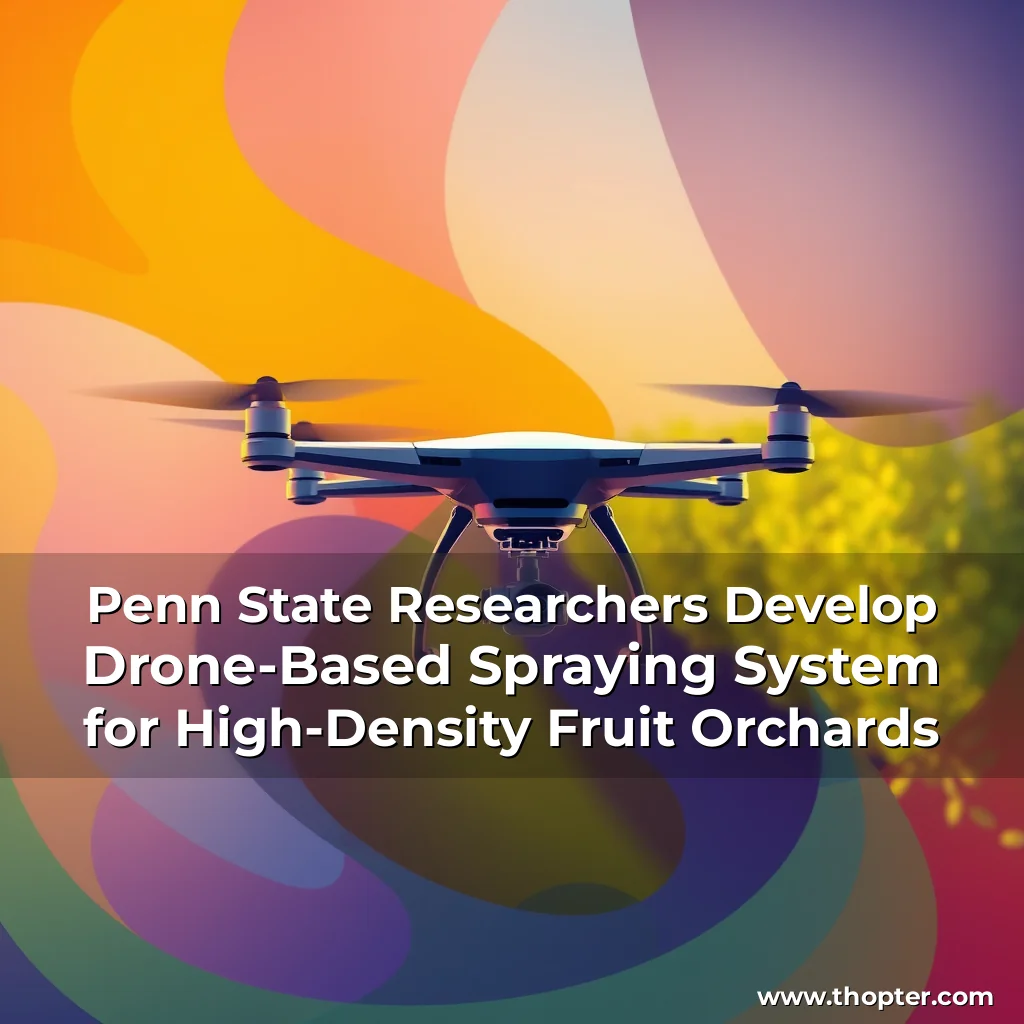
Fruit growers in Pennsylvania and the Northeast are increasingly looking for alternatives to traditional air-blast sprayers, which can be inefficient and prone to breakdowns. The Northeast Region of the Sustainable Agriculture Research and Education Program and the Pennsylvania Department of Agriculture have recently awarded a team of researchers at Penn State’s College of Agricultural Sciences two grants to support their work.
“Many farmers are seeking alternatives to traditional air-blast sprayers, which experience frequent breakdowns and inefficiencies,” said Shanthanu Krishna Kumar, assistant professor of tree fruit. “A survey of growers last year revealed that 95% were eager to explore drone spraying technology, citing increased efficiency, labor savings and improved soil health as key benefits.”
Benefits of Drone-Based Spraying Systems
Pennsylvania is one of the top apple-producing states in the US, with over 14 million bushels harvested annually. The state’s growers are looking for ways to improve their spraying efficiency, particularly in high-density orchards where traditional equipment may not be practical.
- Reduced wind speeds: Drone spraying can take place at night, which reduces the impact of wind on the spraying process and minimizes the risk to pollinators.
- Increased efficiency: Drones can cover larger areas and make more precise applications, reducing the time and labor required for spraying.
- Improved soil health: Drone spraying can deliver more targeted applications, reducing the amount of chemical used and minimizing the risk of runoff.
Challenges and Concerns
While drone-based spraying systems offer several benefits, farmers have raised concerns about the technology’s ability to maintain optimal water volumes and spray coverage. Additionally, there are questions about the effectiveness of growth-regulating chemicals, which are crucial for managing crop loads in orchards.
- Key concerns
- Optimal water volumes and spray coverage
- Efficacy of growth-regulating chemicals
Research Objectives
The research team aims to address these concerns and provide best-practice guidelines for drone applications. The study will involve a series of field trials and demonstrations to optimize drone-based spraying systems for high-density fruit orchards.
- Field trials: The researchers will conduct field trials to determine optimal water volumes, flight parameters, and the efficacy of plant growth regulators applied with low water volumes.
- Demonstrations: The team will conduct demonstrations to show the benefits of drone spraying and provide hands-on training for growers.
Outreach and Education
The researchers will provide outreach and education to growers, including workshops, field days, webinars, and video tutorials. They will also share their findings through industry publications, presentations at conferences, and local meetings.
- Workshops and field days
- Webinars and video tutorials
- Industry publications and presentations
Project Overview
The project is part of the College of Agricultural Sciences’ Technologies for Agriculture and Living Systems (TALiS) initiative, which aims to balance the need for increased food productivity with a commitment to conserving vital living systems.
| Benefits | Traditional Air-Blast Sprayers | Drones |
| Reduced wind speeds | No | Yes |
| Increased efficiency | No | Yes |
| Improved soil health | No | Yes |
Collaboration and Funding
The researchers are working with a team of experts from the Northeast Region of the Sustainable Agriculture Research and Education Program and the Pennsylvania Department of Agriculture. The project has received funding from both organizations, as well as a grant from Penn State Extension.
Conclusion
The research team’s goal is to promote the widespread adoption of drone-based spraying technology in the Northeast, leading to more efficient, sustainable, and economically viable fruit production. By addressing farmers’ concerns and providing accessible, practical solutions, the project aims to create a more sustainable agricultural system. Long-term benefits of this research will be evident in the years to come. Collaboration and innovation are key to achieving this vision. Penn State researchers are leading the way in developing drone-based spraying systems for high-density fruit orchards.