
The Future Soars: Innovations in Thopter Technology and Beyond
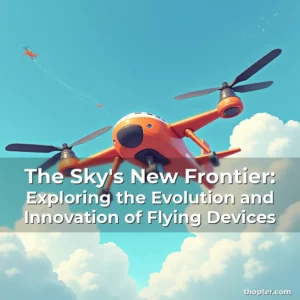
Flying devices have long captured human imagination, transforming from fantastical dreams into tangible realities that shape our world. From ancient myths of winged deities to cutting-edge aerial robotics, the pursuit of flight has driven innovation across centuries.
In recent years, advances in materials science, artificial intelligence, and energy efficiency have propelled flying devices—from drones to personal air vehicles—into mainstream use. This article explores the latest developments in thopter technology, its societal impact, and the exciting frontier ahead.
The Evolution of Flight: A Journey Through Time
Humans have dreamed of flight for millennia, tracing back to legends of Icarus and Da Vinci’s sketches of ornithopters. These early visions laid the groundwork for centuries of experimentation and discovery.
The 19th century saw the first successful powered flight attempts, culminating in the Wright brothers’ historic 1903 achievement. This milestone marked the beginning of aviation as we know it, setting the stage for rapid technological progress.
Modern flying devices owe much to aerospace engineering breakthroughs, particularly in aerodynamics and lightweight materials. Carbon fiber composites and advanced alloys have enabled lighter, faster, and more durable aircraft, revolutionizing transportation and exploration.
Todays thopters represent a fusion of tradition and innovation. While rooted in classic flight principles, they incorporate GPS guidance, obstacle avoidance sensors, and machine learning algorithms for autonomous operation.
- Airship Era: Early dirigibles and blimps demonstrated the feasibility of controlled airborne travel before fixed-wing aircraft dominated the skies.
- Drones Revolution: Small unmanned aerial vehicles (UAVs) emerged in the late 20th century, paving the way for commercial delivery services, agricultural monitoring, and disaster response operations.
Design Principles Behind Modern Flying Devices
Crafting effective flying machines requires balancing performance, safety, and practicality. Engineers focus on optimizing lift-to-drag ratios, power distribution, and stability controls to achieve efficient flight.
Propulsion systems vary widely depending on the device type. Electric motors dominate smaller drones due to their quiet operation and low maintenance costs, whereas jet engines remain vital for high-speed aircraft.
Mechanical components must withstand extreme conditions, from freezing altitudes to turbulent weather patterns. Redundant systems and fail-safes are standard features to prevent catastrophic failures.
Software plays an equally crucial role in modern flying devices. Advanced flight control software enables precise maneuverability, while real-time data analytics enhance decision-making during missions.
The Role of Aerodynamics in Design
Aerodynamic efficiency determines fuel consumption rates and operational range. Streamlined shapes reduce drag forces acting upon moving objects through air currents.
Wingspan configurations significantly influence lift generation capacity. Larger wings provide greater surface area for generating upward force but increase overall weight penalties.
Control surfaces like ailerons allow pilots or automated systems to adjust pitch angles dynamically mid-flight. These adjustments enable tight turns and agile responses to changing environmental factors.
Computational fluid dynamics simulations help designers test various hull forms virtually before constructing physical prototypes—an invaluable tool accelerating product development cycles.
Pioneering Technologies Shaping Tomorrow’s Sky
Artificial Intelligence (AI) stands out as perhaps the most transformative force currently influencing flying device development. Machine learning algorithms enable predictive maintenance scheduling, anomaly detection, and adaptive route optimization capabilities.
Battery technology remains a limiting factor in extending flight durations. Researchers globally strive toward developing higher density lithium-ion cells capable of powering extended journeys safely without compromising structural integrity.
Solar-assisted designs offer promising alternatives for long-range reconnaissance missions. Photovoltaic panels integrated into fuselage structures harness sunlight converting it into usable electrical energy stored onboard batteries.
Quantum computing may soon revolutionize navigation accuracy by enabling ultra-fast computations determining optimal paths avoiding congestion zones or adverse weather conditions automatically.
Applications Across Industries: More Than Just Playthings
Flying devices serve diverse purposes beyond recreational activities. In agriculture, drone-based crop surveillance assists farmers monitor plant health status identifying disease outbreaks early preventing widespread losses.
Emergency medical responders utilize specialized helicopters equipped with life-saving equipment transporting critically injured patients swiftly reaching trauma centers where every minute counts towards survival chances.
Environmental scientists employ remote sensing platforms collecting atmospheric samples analyzing climate change indicators helping policymakers craft targeted mitigation strategies addressing global warming concerns effectively.
Urban planners explore vertical takeoff/landing (VTOL) vehicles alleviating traffic congestion issues improving commute times reducing pollution levels associated with traditional road transport methods.
Regulatory Frameworks Governing Aerial Operations
Governments worldwide establish strict guidelines regulating airspace usage ensuring public safety prioritizing orderly integration of novel flying technologies within existing infrastructures.
Licensing procedures typically involve rigorous training programs certifying operators proficient handling sophisticated avionics systems navigating busy urban environments responsibly.
Data privacy laws protect citizens from unauthorized surveillance activities restricting access to sensitive location tracking information collected via aerial imaging devices deployed commercially.
International treaties coordinate cross-border operations facilitating seamless movement of cargo between nations adhering uniform standards promoting mutual trust enhancing cooperation efforts globally.
Educational Opportunities & Community Engagement
Academic institutions increasingly offer courses focused exclusively on flying device mechanics preparing students careers within burgeoning fields demanding interdisciplinary expertise spanning physics, computer programming, and mechanical engineering disciplines.
Youth STEM initiatives encourage young minds engage hands-on projects building miniature flying robots fostering curiosity sparking interest pursuing scientific research pathways later in life.
Local clubs organize regular meetups showcasing custom-built creations sharing knowledge exchanging ideas inspiring further experimentation pushing boundaries exploring uncharted territories together.
Online forums provide virtual spaces connecting enthusiasts irrespective geographical locations collaborating remotely designing shared projects contributing collectively advancing common goals benefiting everyone involved regardless background differences.
Challenges Ahead: Navigating Uncertain Terrains
Despite remarkable achievements, challenges persist requiring continued investment resources driving further R&D endeavors unlocking untapped potentials lying dormant awaiting discovery.
Public perception often lags behind technological readiness creating hurdles adopting emerging solutions despite proven benefits stemming from well-conducted trials demonstrating reliability effectiveness repeatedly validated scientifically.
Economic disparities hinder equitable access innovative tools depriving marginalized populations opportunities participating fully digital transformation processes shaping tomorrow’s society equitably fairly inclusively.
Sustainability concerns demand responsible disposal end-of-life products recycling components reusing raw materials minimizing ecological footprints caused manufacturing processes extracting natural resources producing consumer goods consumed daily worldwide.
Looking Forward: What Lies Beneath the Clouds?
As we stand on precipice unprecedented change, anticipation builds regarding next big leap forward possibly arriving sooner expected thanks relentless pace advancement occurring continuously unabated.
Collaborative ventures between academia industry sectors promise fruitful outcomes merging theoretical concepts practical implementations yielding groundbreaking discoveries applicable broadly impacting numerous domains simultaneously.
Investment flows into futuristic concepts envisioning self-sustaining ecosystems where flying organisms coexist harmoniously nature integrating seamlessly augmenting biological functions artificially enhanced capabilities surpassing organic limitations inherently imposed evolutionary constraints.
This journey promises endless fascination captivating imaginations challenging assumptions expanding horizons opening doors previously closed forevermore inviting us embrace whatever lies ahead with open hearts eager minds ready explore unknown realms above earth below stars.
Conclusion
Flying devices have evolved dramatically from simple dream constructs into indispensable tools reshaping modern civilization’s fabric daily lives enriched immeasurably through continuous innovation fueled passion curiosity propelling humanity skyward ever upwards striving reach celestial heights.
To stay updated on the latest developments, join online forums, participate in local workshops, and support educational initiatives that promote safe, ethical, and sustainable practices in aerial technology. The sky is not the limit—it’s merely the beginning.