
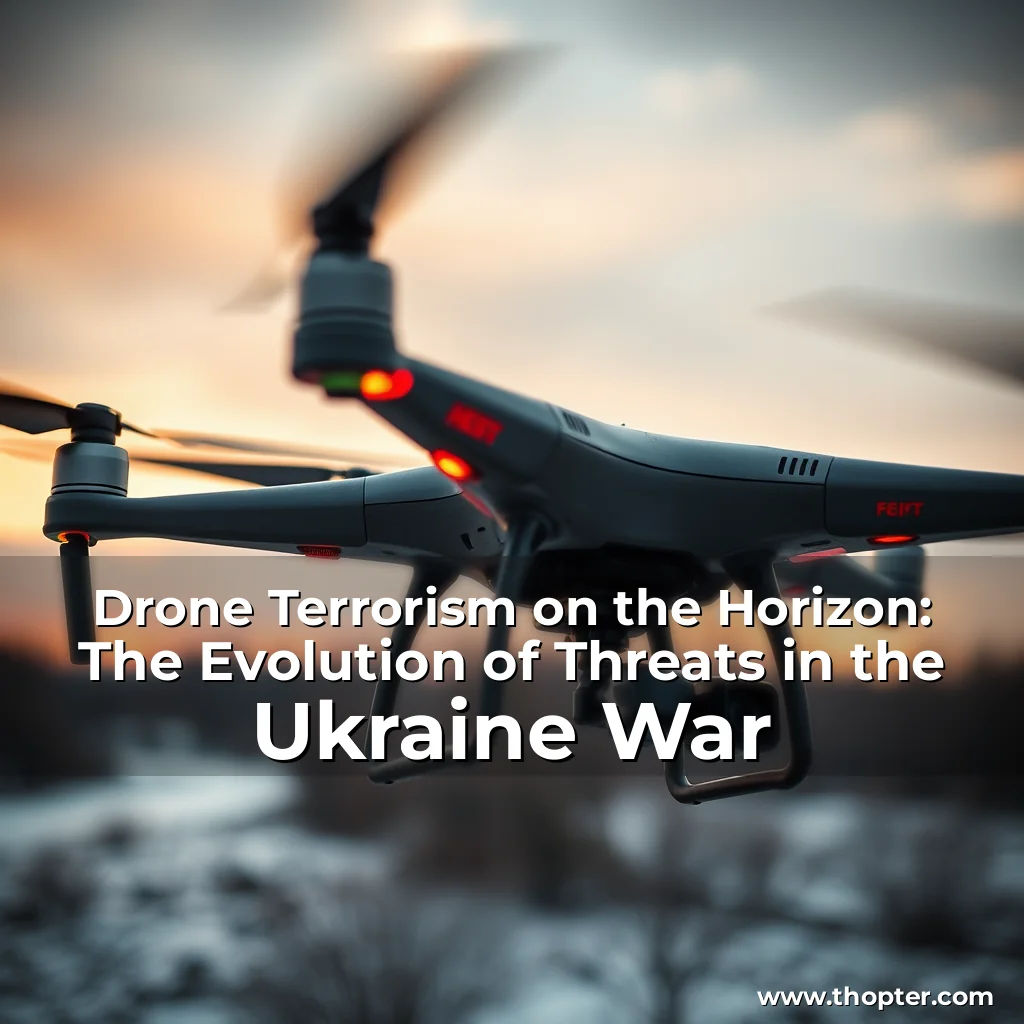
The Russo-Ukrainian conflict has become a focal point for the rapid advancement of drone technology. The accelerated development and adoption of drone systems in this region have significant implications for the global security landscape. As we examine the current state of drone warfare, it is crucial to consider the potential impact on the threat landscape and the ways in which terrorist actors might exploit these advancements.
The War as an Innovation Hub
- Large-scale drone deployments and coordinated attacks have become a normalized aspect of modern warfare in Ukraine.
- The Russo-Ukrainian conflict has accelerated the development and use of high-speed FPV drones.
- The widespread adoption of drone systems in this conflict has significant implications for the global security landscape.
The accelerated development and adoption of drone technology in the Russo-Ukrainian war has created a unique environment that fosters innovation and experimentation. The rapid advancement of drone capabilities, coupled with the willingness to experiment with new tactics and technologies, has made this conflict a critical “innovation hub” for drone warfare. As we analyze the current state of drone warfare, it is essential to consider the potential impact of these advancements on the threat landscape and the ways in which terrorist actors might exploit these developments.
The Growing Threat of Terror Drone Activity
- The Russo-Ukrainian war has created new opportunities for violent extremist organizations (VEOs) to enhance their operational impact.
- The war has normalized large-scale drone deployment, demonstrating the feasibility of launching coordinated drone swarms and phased attacks capable of overwhelming existing defenses.
- The widespread use of high-speed FPV drones in Ukraine highlights the tactical value of speed and agility.
- The integration of emerging technologies, such as AI-assisted targeting, with drones could significantly increase the precision and impact of future terrorist attacks.
The Russo-Ukrainian conflict has created a fertile ground for terrorist actors to develop and refine their drone capabilities. The war has normalized large-scale drone deployment, demonstrating the feasibility of launching coordinated drone swarms and phased attacks capable of overwhelming existing defenses. This has significant implications for the global security landscape, as terrorist actors can now exploit these advancements to enhance their operational impact.
The Growing Threat of Long-Range Drone Operations
| Characteristics of Long-Range Drone Operations: |
| Capable of traveling long distances without being detected |
| Can be used to conduct reconnaissance, surveillance, or attacks from a distance |
| Can be used to transport payloads, such as explosives or communication devices |
The Russo-Ukrainian war has also highlighted the growing threat of long-range drone operations. These systems can travel significant distances without being detected and can be used to conduct reconnaissance, surveillance, or attacks from a distance. This creates a new challenge for governments and security agencies, as these systems can be used to transport payloads, such as explosives or communication devices, and conduct complex operations.
The Convergence of Drone Warfare with Other Disruptive Technologies
“The convergence of drone warfare with other disruptive technologies, such as additive manufacturing and artificial intelligence, creates even more opportunities for extremists to be creative and to innovate with drones in the future.”
The rapid advancement of drone technology has also led to the convergence of drone warfare with other disruptive technologies, such as additive manufacturing and artificial intelligence. This convergence creates significant opportunities for extremist actors to be creative and innovative with drones, potentially leading to new and complex threats.
Challenges for Counter-UAS Systems and Legal Frameworks
- Counter-UAS systems are struggling to keep pace with the rapid advancement of drone technology.
- The development of effective countermeasures requires significant investment and coordination among governments, industry, and academia.
- Legal frameworks guiding the use of drones are also struggling to keep pace with these changes.
- There is a need for clear and effective regulations to guide the development and use of drones.
The rapid advancement of drone technology has also created significant challenges for counter-UAS systems and legal frameworks. Counter-UAS systems are struggling to keep pace with the rapid development of drone capabilities, and there is a need for significant investment and coordination among governments, industry, and academia to develop effective countermeasures. Similarly, legal frameworks guiding the use of drones are also struggling to keep pace with these changes, and there is a need for clear and effective regulations to guide the development and use of drones.
Conclusion
The Russo-Ukrainian conflict has become a critical “innovation hub” for drone warfare, accelerating advancements in the scale, speed, and range of drone operations. As we analyze the current state of drone warfare, it is essential to consider the potential impact of these advancements on the threat landscape and the ways in which terrorist actors might exploit these developments.