
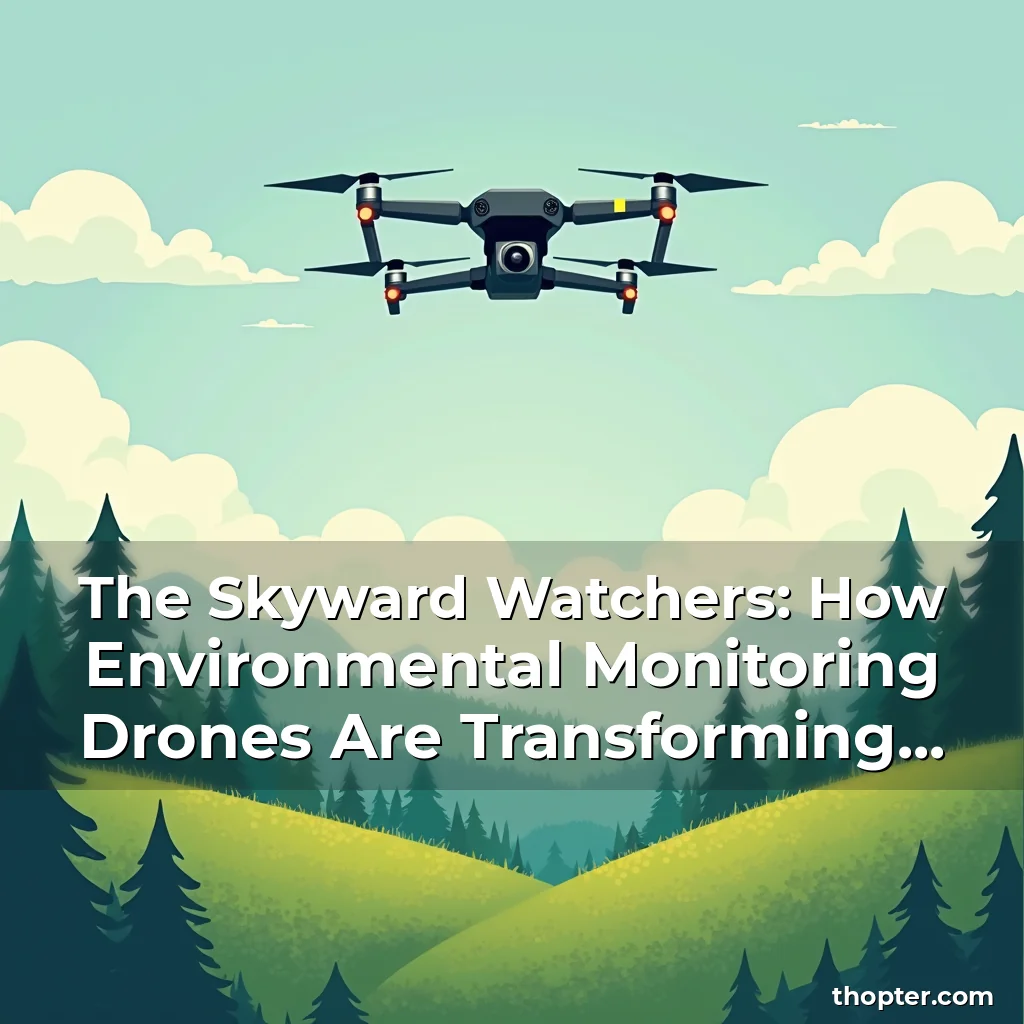
The Skyward Watchers: How Environmental Monitoring Drones Are Transforming Ecosystem Conservation
In an era where climate change looms over global ecosystems, environmental monitoring drones have emerged as silent sentinels above our planet’s most vulnerable landscapes. These advanced aerial platforms are revolutionizing how scientists track deforestation rates, monitor wildlife populations, and detect pollution sources with unprecedented precision.
With cutting-edge sensor technology integrated into compact unmanned aircraft systems, these drones can collect high-resolution data across remote terrains that were previously inaccessible. Their ability to operate autonomously while transmitting real-time information is reshaping conservation strategies worldwide.
Unveiling Nature’s Secrets Through Aerial Surveillance
Drones equipped with multispectral cameras provide invaluable insights into plant health by analyzing chlorophyll levels through spectral signatures. This capability allows researchers to identify stressed vegetation long before visible symptoms appear in ground surveys.
Thermal imaging sensors enable detection of animal movements at night, revealing migration patterns and behavioral changes that would be nearly impossible to observe from the ground. Such data helps biologists understand ecosystem dynamics more comprehensively.
- Spectrometer Integration: Modern drones now carry spectrometers capable of measuring light wavelengths reflected off surfaces to assess soil composition and water quality parameters.
- Hyperspectral Imaging: This advanced technique captures hundreds of narrow wavelength bands, enabling precise identification of plant species and detecting early signs of disease outbreaks.
Precision Mapping for Habitat Restoration Efforts
High-resolution LiDAR-equipped drones create three-dimensional maps of forested areas, providing critical data for reforestation projects. These digital elevation models help ecologists determine optimal planting locations based on terrain features and sunlight exposure.
Time-lapse mapping capabilities allow continuous tracking of habitat recovery after wildfires or oil spills. By comparing drone-collected imagery over time intervals, conservationists measure restoration progress with quantifiable metrics.
Case Study: Post-Wildfire Recovery Assessment
A 2022 study conducted in California used drone-based mapping to monitor burn scar evolution following the Dixie Fire. Researchers found that certain tree species regenerated faster than expected when planted according to topographic contours identified through aerial surveys.
This methodology reduced reseeding costs by 40% compared to traditional assessment methods while increasing survival rates among newly planted saplings by 28%. The cost-effectiveness of aerial mapping has made it a standard practice in post-disaster ecological rehabilitation efforts.
Wildlife Protection in Remote Terrains
Drones fitted with passive acoustic sensors record animal vocalizations, helping researchers map biodiversity hotspots even in densely vegetated regions. These recordings contribute significantly to population estimates and species distribution studies.
Camouflaged drones operating at low altitudes minimize disturbance to sensitive wildlife habitats. When paired with AI-powered image recognition software, they can distinguish between different species in complex environments with remarkable accuracy.
- Anti-Poaching Patrols: Equipped with thermal imaging, drones effectively monitor protected areas at night, deterring poachers who often exploit darkness to conduct illegal activities.
- Nesting Site Surveys: High-definition cameras capture intricate details of bird nests and marine turtle nesting beaches, allowing conservationists to implement targeted protection measures.
Water Quality Analysis From Above
Hydrological monitoring drones analyze surface water bodies using specialized sensors that measure turbidity, pH levels, and dissolved oxygen content. This data informs management decisions regarding aquatic ecosystem health and pollution control initiatives.
In coastal regions, drones track algal blooms by detecting subtle color variations invisible to the naked eye. Early warning systems built around these observations prevent economic losses from harmful red tide events affecting fisheries and tourism industries.
- Turbidity Sensors: Optical sensors quantify suspended particle concentrations in water, which correlates strongly with erosion rates and sedimentation problems in river basins.
- Biochemical Oxygen Demand Measurement: Electrochemical probes assess organic matter decomposition processes crucial for maintaining balanced aquatic food chains.
Climate Change Research Applications
Arctic monitoring programs employ drones to study ice sheet retreat patterns, capturing millimeter-level thickness measurements that reveal accelerating glacial melt trends. These data points feed directly into global climate modeling algorithms.
Oceanic research vessels deploy drones to sample atmospheric conditions at various altitude levels. The collected air chemistry data helps scientists understand greenhouse gas exchange mechanisms between landmasses and marine environments.
- Carbon Sequestration Studies: Infrared sensors mapped peatland carbon storage capacities in Indonesia, guiding policymakers in developing effective emission reduction strategies.
- Methane Plume Detection: Thermal imaging identified methane leaks from thawing permafrost zones in Siberia, contributing vital information to Arctic climate change projections.
Economic Impact on Environmental Management
The integration of drone technology reduces field survey labor requirements by up to 65%, freeing personnel for higher-value analytical tasks. Automated data collection also minimizes human error associated with manual recording procedures.
Cost savings from aerial monitoring extend beyond direct operational expenses. Faster data acquisition enables quicker response times during environmental crises, potentially reducing long-term remediation costs by 30-50% depending on the situation severity.
ROI in Conservation Projects
An Australian reef monitoring program demonstrated that drone-assisted coral bleaching assessments cut evaluation timelines by two-thirds while improving damage classification accuracy by 42%. This efficiency translated to significant budget reallocations towards active reef restoration work.
Similarly, wildfire-prone regions in Spain reported a 29% decrease in firefighting expenditures after implementing predictive fire spread models derived from historical drone surveillance data. Proactive resource allocation became possible due to enhanced risk forecasting capabilities.
Technological Advancements Driving Innovation
Recent developments in battery technology have extended flight durations to over eight hours, allowing continuous monitoring of expansive natural reserves without requiring frequent refueling stops. Solar-powered charging solutions further enhance operational flexibility in remote locations.
AI-driven analytics platforms now automatically categorize thousands of images daily, identifying anomalies such as illegal logging operations or invasive species encroachments within minutes rather than days.
- Swarm Technology: Coordinated drone networks can cover larger areas simultaneously, collecting synchronized datasets that enhance spatial resolution and temporal coverage.
- Autonomous Navigation Systems: GPS-guided path optimization algorithms ensure complete area coverage while minimizing energy consumption and maximizing mission effectiveness.
Ethical Considerations in Drone Usage
While environmental monitoring offers numerous benefits, concerns exist regarding privacy implications for nearby communities and potential disturbances to wildlife behavior patterns caused by regular drone flights.
Regulatory frameworks must balance technological advantages with ethical responsibilities, ensuring that drone deployment respects both ecological integrity and human rights considerations in monitored regions.
- Noise Pollution Mitigation: Manufacturers are developing quieter propulsion systems to reduce stress responses in animals accustomed to quiet natural soundscapes.
- Data Security Protocols: Encryption standards protect sensitive ecological data from unauthorized access, preserving scientific credibility and preventing misuse of findings.
Future Prospects and Emerging Trends
Advances in nanotechnology may soon lead to micro-drones capable of collecting biological samples from hard-to-reach locations, opening new frontiers in microbial ecology research and genetic diversity analysis.
Integration with satellite networks promises seamless data transmission across vast distances, creating truly global environmental monitoring capabilities that transcend geographical limitations currently imposed by line-of-sight communication constraints.
- Quantum Sensing Innovations: Experimental quantum sensors could dramatically increase measurement sensitivity, enabling detection of minute atmospheric changes undetectable by current instrumentation.
- Biodegradable Components: Ongoing material science breakthroughs aim to develop fully decomposable drone parts that leave no trace after completing their missions in fragile ecosystems.
Conclusion
As we’ve explored, environmental monitoring drones represent a paradigm shift in how humanity interacts with and understands its natural environment. Their multifaceted applications span from climate research to habitat preservation with transformative results.
For members of the thopter community and all those passionate about ecological stewardship, embracing these technologies presents not just opportunities but urgent necessities in our collective effort to safeguard Earth’s dwindling natural resources.
“`