
The Sky’s New Frontier: Exploring the World of Modern Drone Technology
In an era where technology is rapidly reshaping our world, drones have emerged as one of the most transformative innovations. From capturing breathtaking aerial footage to revolutionizing industries such as agriculture, logistics, and emergency response, these flying machines are redefining what’s possible.
Their versatility and adaptability make them indispensable tools across various sectors. As we delve deeper into the realm of drone technology, you’ll discover how they’re not only changing the way we work but also expanding our horizons in ways previously unimaginable.
Understanding the Basics of Drone Technology
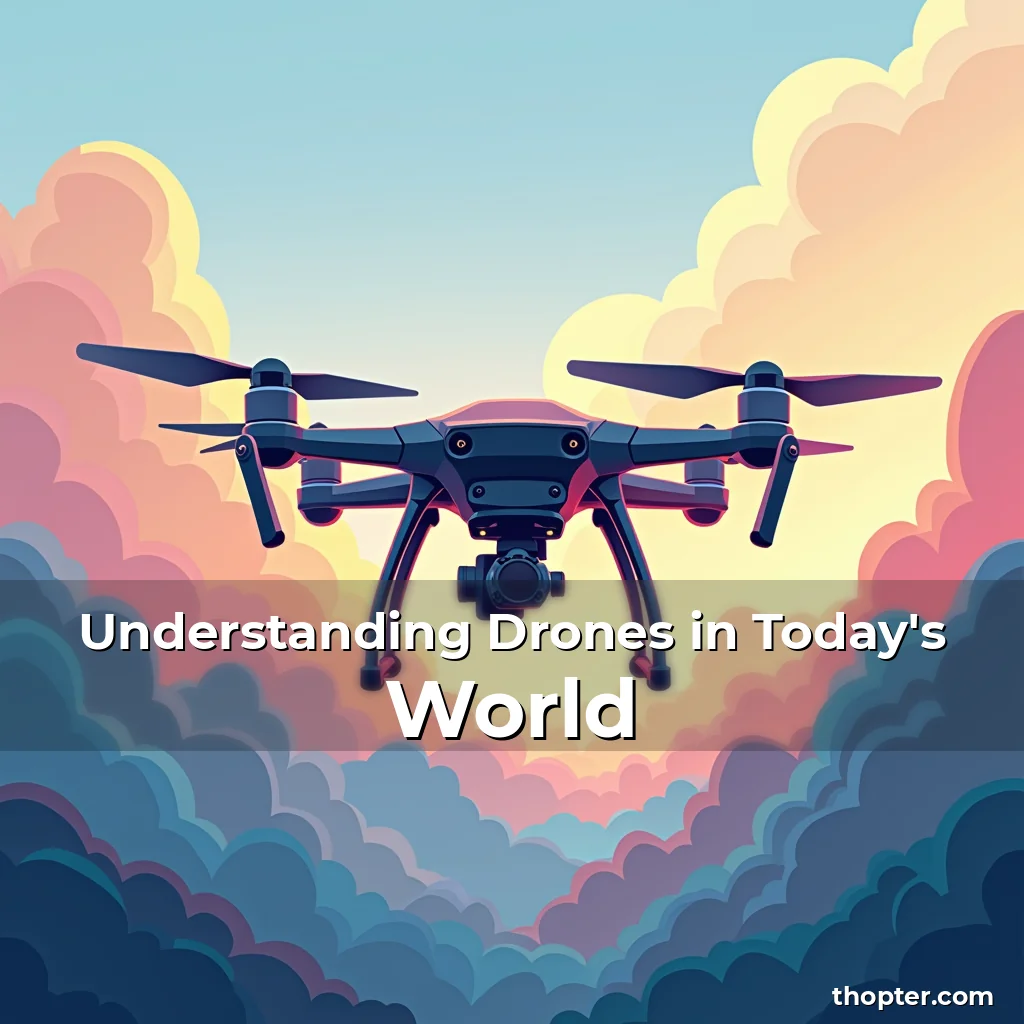
Drones, also known as unmanned aerial vehicles (UAVs), come in a wide variety of shapes, sizes, and capabilities. They range from small hobbyist models used for recreational purposes to advanced military-grade systems equipped with cutting-edge sensors and weapons.
At their core, drones operate using a combination of onboard computers, GPS navigation systems, and remote control mechanisms. These components enable precise flight control and allow users to maneuver the aircraft remotely with ease.
The evolution of drone technology has been driven by advancements in battery life, miniaturization of electronics, and improvements in artificial intelligence algorithms that enhance autonomous functionality.
Modern drones often feature obstacle avoidance systems that use cameras and ultrasonic sensors to detect potential collisions and adjust flight paths accordingly.
- Battery Life: A critical factor affecting drone performance; longer-lasting batteries extend operational time significantly.
- Payload Capacity: Determines how much equipment a drone can carry, which influences its application in fields like photography or delivery services.
The Rise of Consumer Drones and Their Impact
The consumer market has witnessed explosive growth due to declining costs and increasing accessibility. Affordable yet powerful models now empower individuals to explore new hobbies and capture stunning images without needing expensive professional gear.
This democratization of aerial imaging has led to a surge in demand among photographers, filmmakers, and social media influencers who rely heavily on high-quality visuals for creative projects.
Leading manufacturers such as DJI, Autel Robotics, and Parrot continue pushing technological boundaries while making sophisticated features available at competitive prices.
Consumer drones typically offer features like 4K video recording, gimbal stabilization, and real-time image transmission via smartphone apps.
With each new release, companies integrate enhancements aimed at improving user experience through better connectivity options and enhanced safety protocols.
Industrial Applications Driving Innovation
Beyond entertainment, drones play crucial roles in numerous industrial applications. In agriculture, farmers utilize them for crop monitoring, precision spraying, and yield estimation—tasks once performed manually or with traditional machinery.
Logistics companies leverage drones to deliver medical supplies, food items, and even packages to remote areas where conventional transport methods face limitations or inefficiencies.
Construction sites benefit immensely from aerial surveys conducted by drones, providing accurate data that helps streamline project management processes effectively.
Emergency responders employ drones during search-and-rescue missions, disaster assessments, and wildfire tracking—capacities that save lives by offering rapid situational awareness over vast regions quickly.
Environmental scientists harness drone imagery to monitor deforestation rates, track wildlife populations, and assess climate change impacts more efficiently than ever before.
Economic Implications Across Sectors
The integration of drones into various economic sectors has spurred job creation opportunities within both tech development and service provision domains. This includes roles related to maintenance, programming, piloting operations, and data analysis associated with UAV usage.
A report by PwC estimates that the global drone industry could generate up to $127 billion annually by creating efficiencies across different vertical markets ranging from infrastructure inspection to insurance claims processing.
Farmers adopting drone technologies see reductions in labor costs alongside increased productivity levels thanks to optimized resource allocation strategies enabled by precise aerial analytics.
Urban planners gain invaluable insights through high-resolution mapping provided by drones, aiding smarter city designs focused around sustainability goals and efficient land utilization practices.
Military Uses and Ethical Considerations
While civilian uses dominate public perception, militaries worldwide extensively deploy drones for reconnaissance, surveillance, targeted strikes, and combat support functions. These applications highlight significant strategic advantages offered by UAV platforms.
Autonomous weaponized drones raise complex ethical questions regarding accountability, proportionality, and compliance with international humanitarian law frameworks governing armed conflict scenarios.
Nations invest heavily in developing stealthier variants capable of evading enemy radar detection while maintaining high survivability rates against potential threats posed by adversaries’ air defenses.
Critics argue that widespread adoption may lead to arms races involving increasingly lethal automated systems whose deployment decisions lack human oversight entirely.
International treaties attempt regulate responsible use patterns ensuring transparency standards apply equally regardless of country origin when deploying armed UAV capabilities globally.
Regulatory Frameworks Governing Drone Operations
Governments impose strict regulations to ensure airspace safety, privacy protection, and prevent misuse of drone technology. Compliance requirements vary based on geographical location but generally involve registration procedures, pilot certification exams, and restricted area restrictions.
Operators must adhere to altitude limits usually set between 400 feet above ground level unless special permits grant exceptions allowing higher altitudes under controlled conditions.
No-fly zones prohibit unauthorized flights near airports, government buildings, correctional facilities, and other sensitive locations designated for security reasons.
Licensing authorities mandate training programs emphasizing safe handling techniques including pre-flight checks, emergency landing protocols, and adherence to local aviation authority guidelines.
Advancements in geofencing technology help enforce legal boundaries automatically preventing accidental incursions into protected airspace corridors managed by regulatory bodies overseeing national skies responsibly.
Future Trends Shaping Drone Development
Ongoing research focuses on enhancing autonomy levels enabling fully self-navigating systems capable of executing complex tasks independently without constant human intervention required traditionally.
Integration of AI-powered object recognition software allows drones to identify objects accurately facilitating applications spanning from package sorting automation inside warehouses to identifying poaching activities within conservation reserves effortlessly.
Swarm intelligence concepts envision fleets working collaboratively akin to insect colonies performing coordinated actions simultaneously towards shared objectives efficiently surpassing individual unit capacities alone.
Sustainable energy solutions aim reduce environmental footprint through hybrid propulsion systems combining electric motors powered by renewable sources coupled with hydrogen fuel cells promising extended range capabilities sustainably.
As 5G networks expand coverage reach exponentially, future generations will exploit ultra-low latency connections necessary supporting real-time decision-making processes essential for dynamic environments requiring immediate responses reliably.
Conclusion
Drones represent a remarkable convergence of engineering prowess and digital innovation poised to reshape everyday experiences profoundly across diverse contexts.
To stay ahead amidst evolving landscapes surrounding this field, enthusiasts and professionals alike need continuous learning efforts embracing emerging trends shaping tomorrow’s aerial ecosystems proactively rather than passively reacting after developments unfold later down the line.