
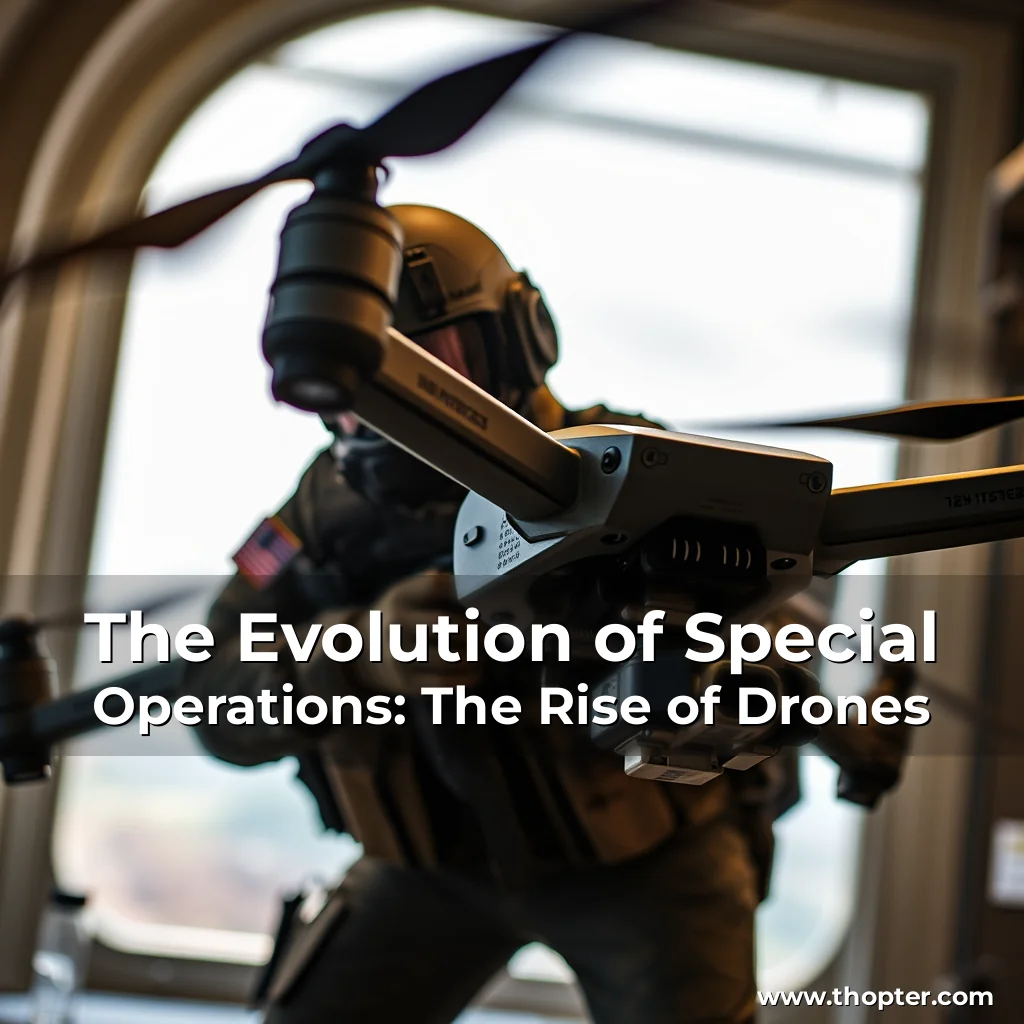
The world of special operations has undergone a significant transformation in recent years, driven by the integration of drone technologies into the operational toolkit of special forces. This technological revolution has brought about a new era of precision and flexibility, enabling special operations forces to respond to complex threats and missions with greater effectiveness.
The Future of Special Operations
The Special Operations Forces (SOF) Week 2025 event will serve as a platform for experts to showcase the latest advancements in special operations capabilities, with a focus on the transformative impact of drone technologies. The event will feature live demonstrations, interactive seminars, and technology exhibitions that highlight the latest advancements in special operations capabilities.
- Drone technologies will be at the forefront of SOF Week 2025, reflecting their transformative impact on special operations.
- Attendees will have the opportunity to witness live drone demonstrations that showcase autonomous flight, rapid response, and seamless integration with ground operations.
- Experts will discuss the operational benefits and technical advancements that have made drone technology indispensable in the field of special operations.
Drones in Modern Warfare
Drones have revolutionized the way modern warfare is conducted. They are now an indispensable tool for special operations forces, providing a flexible and scalable solution for various missions. From reconnaissance to direct action, drones have proven to be a game-changer in the battlefield.
| Characteristics | Examples |
|---|---|
| Stealth Design | Northrop Grumman’s RQ-4 Global Hawk |
| Navigation | Teledyne Flir’s Black Hornet 4 |
| Sensor Capabilities |
The Military’s Reliance On Drones
The military has increasingly relied on drones for various missions, including surveillance, reconnaissance, and strike operations. Drones are now a critical component of modern warfare, providing a range of benefits including:
- Enhanced situational awareness
- Improved efficiency
- Increased precision targeting
- Reduced collateral damage
Examples of Drones Used by the Military
The military has developed a range of drones for various purposes, including:
- MQ-9 Reaper
- RQ-4 Global Hawk
- MQ-1 Predator
- MQ-20 Avenger
How Special Ops Are Using Drones
Special operations forces have increasingly integrated drone technology into their operational toolkit, enabling greater situational awareness, precision targeting, and enhanced reconnaissance in complex environments. Both Navy SEALs and Green Berets are at the forefront of this transformation, using drones to support missions ranging from intelligence, surveillance, and reconnaissance (ISR) to direct action in high-risk environments.
- First-Person View (FPV) drones are being used by special ops to navigate urban landscapes, caves, and tunnels where traditional surveillance is limited.
- FPV drones provide operators with a real-time, immersive view of the battlefield through specialized goggles.
- Green Berets are seeking FPV drone capabilities to clear hostile cave complexes and enhance their ability to conduct covert reconnaissance in confined spaces.
Intelligence Online and the Evolution of Special Ops
The integration of drones into special operations has provided commanders with a flexible, scalable tool that enhances both offensive and defensive operations. Drones enable precise targeting with minimal collateral damage and allow rapid adjustments during missions.
“The Ukrainians make use of a wide range of explosives to arm drones,” Roman Kostenko, the chairman of the defense and intelligence committee in Ukraine’s Parliament, notes. “They drop grenades, mortar rounds, or mines on enemy positions. They repurpose anti-tank weapons and cluster munitions to fit onto drones, or they use anti-personnel fragmentation warheads and others with thermobaric charges to destroy buildings and bunkers.”
The Future of Drones in Special Ops
As technology continues to evolve – with improvements in autonomy, obstacle avoidance, and weaponization – special ops are expected to leverage these systems to maintain a tactical edge in future conflicts. By combining traditional combat skills with modern drone technology, Navy SEALs and Green Berets are redefining modern warfare, making operations safer and more effective in an increasingly complex battlespace.